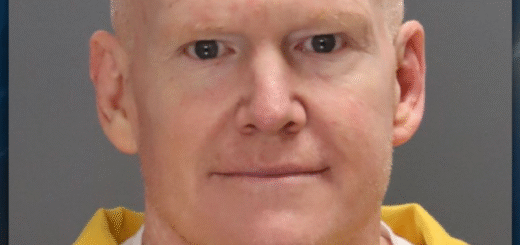
Who Is Eugene Gligor & Where Is He Now? 2026 Update & Profile

For more than 23 years, Eugene Gligor lived without being publicly identified as the man responsible for the murder of Leslie Preer. Investigators had recovered his DNA from the crime scene in 2001, but because it did not match anyone in law enforcement databases, his identity remained unknown for decades.
The case changed after Montgomery County Police reopened the investigation and turned to forensic genetic genealogy. By combining advanced DNA analysis with traditional investigative work, detectives linked Gligor to the crime, leading to his arrest, guilty plea and prison sentence. His conviction finally brought answers to Leslie Preer’s family and resolved one of Montgomery County’s longest-running cold cases.
- “First Comes Love, Then Comes Murder”: 20/20 Reports on Leslie Preer Homicide July 24 2026
- Who Was Leslie Preer & What Happened to Her? 2026 Update & Profile
Contents
- Eugene Gligor’s Connection to the Preer Family
- The Murder Investigation Goes Cold
- Genetic Genealogy Identifies a New Suspect
- The Airport Surveillance Operation
- Arrest and Criminal Charges
- Guilty Plea
- Sentencing Hearing
- Leslie Preer’s Family Responds
- Where Is Eugene Gligor Now?
- A Case That Changed Cold Case Investigations
- More “First Comes Love, Then Comes Murder”
- More Feature Articles
Eugene Gligor’s Connection to the Preer Family
At the time of Leslie Preer’s murder in May 2001, Eugene Gligor was not a stranger to the family. He had previously dated Leslie’s daughter, Lauren Preer, while they were in high school.
Because of that relationship, Gligor was familiar with the Preer family and knew where they lived. Investigators later concluded that this connection explained how he had access to the family home without attracting immediate suspicion.
Despite his relationship with Lauren, Gligor was not identified as the killer during the original investigation. Although a neighbour reportedly suggested to police several months after the murder that detectives should look at Lauren’s former boyfriend, the tip did not result in charges.
Without a DNA sample from Gligor to compare against the evidence collected at the crime scene, investigators could not establish the connection needed to identify him as the suspect.
The Murder Investigation Goes Cold
When Leslie Preer was found beaten to death inside her Chevy Chase, Maryland, home on May 2, 2001, investigators launched an extensive homicide investigation.
Detectives collected blood evidence from several rooms of the house and recovered male DNA from beneath Leslie’s fingernails, indicating she had fought with her attacker during the assault.
The DNA profile did not match her husband, Carl “Sandy” Preer, despite him becoming the primary focus of the early investigation. It also failed to match anyone in the Combined DNA Index System (CODIS), the national law enforcement DNA database.
Without a suspect whose DNA could be compared to the evidence, the investigation stalled and eventually became a cold case that remained unsolved for more than two decades.
Genetic Genealogy Identifies a New Suspect
In 2022, Montgomery County Police detectives Tara Augustin and Alyson Dupouy reopened the case and submitted the preserved DNA evidence for advanced forensic genetic genealogy testing through Othram, a laboratory specialising in difficult DNA cases.
Rather than searching only for direct matches in criminal databases, forensic genetic genealogy examines publicly available DNA databases to identify relatives of an unknown suspect.
The investigation eventually led detectives to a family line originating in Romania. As investigators built an extensive family tree, they encountered the surname Gligor, a name that immediately stood out because it appeared in the original investigative file.
Detectives realised Eugene Gligor had once dated Lauren Preer. Combined with the genetic evidence, the discovery transformed him from a historical name in the case file into the leading suspect.
The Airport Surveillance Operation
Although detectives believed Eugene Gligor was responsible for Leslie Preer’s murder, they still needed a direct DNA sample to confirm their theory.
Because Gligor’s DNA had never been entered into a law enforcement database, investigators placed him under surveillance instead of immediately approaching him.
In June 2024, detectives followed Gligor to Washington Dulles International Airport. Surveillance teams watched as he drank from a plastic water bottle before throwing it into a public rubbish bin.
Investigators quickly recovered the discarded bottle and submitted it for forensic testing.
Within a week, laboratory analysis confirmed that DNA recovered from the bottle matched the male DNA found beneath Leslie Preer’s fingernails and elsewhere inside the crime scene.
The result provided investigators with the evidence needed to obtain an arrest warrant.
Arrest and Criminal Charges
On June 18, 2024, members of the U.S. Marshals Service arrested Eugene Gligor at his apartment in Washington, D.C.
He was extradited to Montgomery County, Maryland, where prosecutors charged him with second-degree murder in connection with Leslie Preer’s death.
During police interviews, Gligor denied involvement in the killing.
Despite his denials, prosecutors relied heavily on the DNA evidence, which linked him directly to Leslie’s struggle inside the home and to blood recovered throughout the crime scene.
The arrest also cleared Leslie’s husband, Sandy Preer, whose DNA had been excluded from the evidence years earlier but who had lived under suspicion until his death in 2017.
Guilty Plea
Rather than taking the case to trial, Gligor pleaded guilty to second-degree murder in May 2025.
The guilty plea formally acknowledged his responsibility for Leslie Preer’s death while avoiding a jury trial.
Although he admitted guilt, Gligor never fully explained why he went to Leslie’s home or what triggered the fatal assault.
The absence of a clear motive remains one of the unanswered questions surrounding the case.
Sentencing Hearing
At sentencing, prosecutors described the murder as an exceptionally violent crime and argued that Gligor had spent more than two decades avoiding responsibility.
They also pointed to evidence suggesting he attempted to clean parts of the crime scene following the attack.
Gligor’s defence attorney argued that he had experienced significant childhood trauma and struggled with alcohol and cocaine abuse.
The defence claimed the murder followed a night of heavy substance use and argued there was no identifiable motive behind the attack.
When addressing the court, Gligor told the judge he had blacked out and remembered very little about what happened.
He said he vaguely remembered leaving the Preer home the following morning but could not explain why he had gone there or what had occurred inside the residence.
He apologised to Leslie’s family and expressed remorse but maintained he could not remember the details of the killing.
Leslie Preer’s Family Responds
Several members of Leslie Preer’s family addressed the court during the sentencing hearing.
Lauren Preer described Gligor as “a wolf in sheep’s clothing,” reflecting the betrayal she felt after learning that someone she had once dated was responsible for her mother’s murder.
Family members also spoke about the years Sandy Preer spent under suspicion before dying in 2017 without seeing the real killer identified.
Their statements highlighted how the investigation affected multiple generations of the family long after Leslie’s death.
Where Is Eugene Gligor Now?
Eugene Gligor is serving a 22-year prison sentence after pleading guilty to second-degree murder for killing Leslie Preer.
On August 28, 2025, Montgomery County Circuit Court Judge David Lease sentenced him to 22 years in prison. The sentence exceeded Maryland’s recommended sentencing guidelines but was less than the 30-year maximum sought by prosecutors.
Following sentencing, reports indicated Gligor filed a motion asking the court to reconsider the length of his sentence. There has been no public indication that his conviction has been overturned or that he has been released.
As of 2026, Gligor remains incarcerated in the Maryland correctional system serving his sentence for the murder of Leslie Preer.
A Case That Changed Cold Case Investigations
Eugene Gligor’s conviction illustrates how advances in forensic genetic genealogy have transformed homicide investigations that once appeared impossible to solve.
The DNA evidence that identified him had existed since 2001. What changed was the technology available to interpret it and the persistence of detectives willing to revisit decades-old evidence with fresh eyes.
The investigation also restored Leslie Preer’s family’s confidence that justice had finally been achieved and publicly cleared Sandy Preer of the suspicions that followed him until his death.
More than two decades after Leslie Preer was murdered, Eugene Gligor’s identification and conviction closed one of Maryland’s most significant cold cases and demonstrated how preserved forensic evidence can continue speaking long after a crime has been committed.
More “First Comes Love, Then Comes Murder”
- “First Comes Love, Then Comes Murder”: 20/20 Reports on Leslie Preer Homicide July 24 2026
- Who Was Leslie Preer & What Happened to Her? 2026 Update & Profile
- Who Is Eugene Gligor & Where Is He Now? 2026 Update & Profile
More Feature Articles
- “First Comes Love, Then Comes Murder”: 20/20 Reports on Leslie Preer Homicide July 24 2026
- “The Mushroom Mystery”: Dateline NBC Reports on David Fouts Homicide July 24 2026
- “A Promise to Gloria”: Dateline NBC Reports on Gloria Pointer Homicide July 25 2026
- “Justine’s Voice”: 48 Hours Reports on Justine Vanderschoot Homicide on July 25 2026
- “The Boy Across the Street”: 48 Hours Investigates the Catina Salarno Murder Homicide on July 25 2026//