


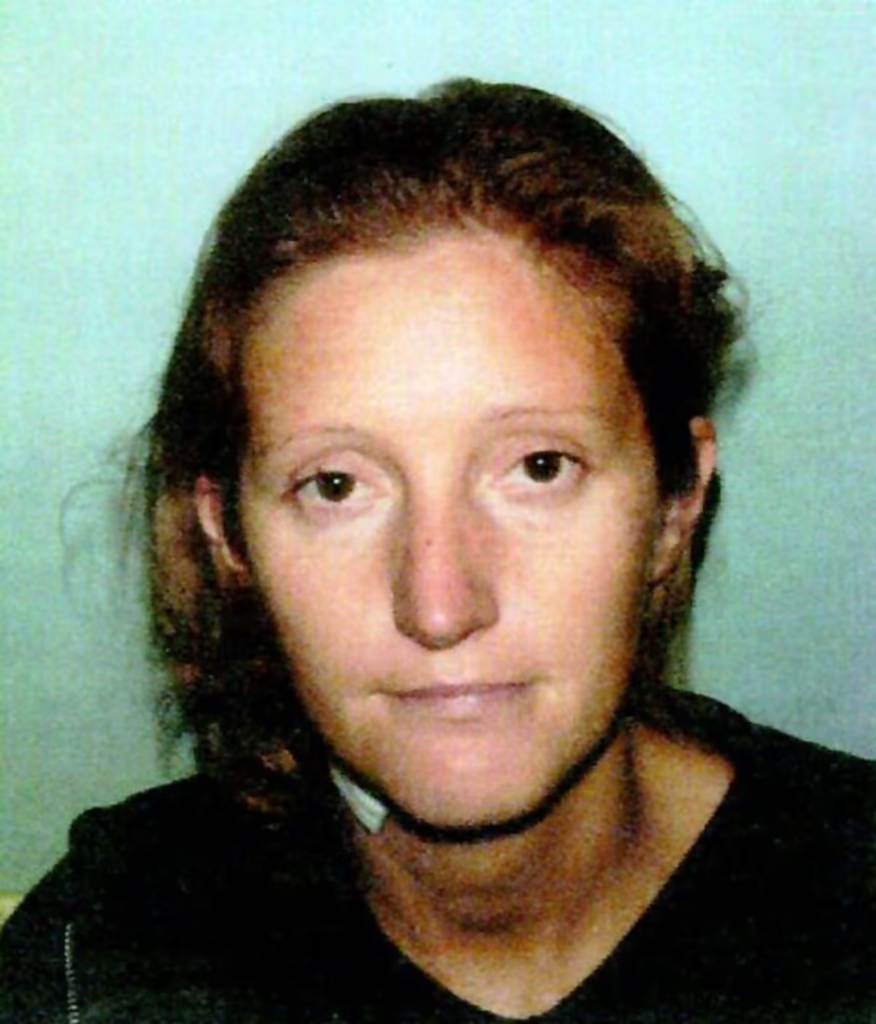
Jane Andrews once occupied a position few people outside Britain’s aristocratic world could imagine. For almost a decade, she worked as dresser and personal assistant to Sarah Ferguson, Duchess of York, traveling with her employer and moving through royal circles at a time when Ferguson was one of the most photographed women in Britain.
That life ended long before Andrews became known for another reason. In 2001, an Old Bailey jury convicted her of murdering her boyfriend, businessman Thomas “Tom” Cressman, after he was struck with a cricket bat and stabbed at the couple’s Fulham home. Andrews received a life sentence and spent years in prison before securing parole.
Today, Andrews is no longer in prison. She was released in 2015, recalled to custody in 2018 and released for a second time in 2019. She remains subject to a life licence, which means her murder sentence continues even though she lives in the community. Her precise location has not been made public, and representatives say she has sought to build a private life away from the attention that has followed her for more than 25 years.
Contents
- Jane Andrews Went From Royal Dresser to Convicted Murderer
- Tom Cressman Was Killed in September 2000
- An Old Bailey Jury Rejected Andrews’ Defense
- Andrews Escaped From Prison in 2009
- Jane Andrews Was Released From Prison in 2015
- Andrews Was Recalled to Prison in 2018
- Jane Andrews Was Released Again in 2019
- Where Does Jane Andrews Live Now?
- What Does Jane Andrews Do for Work?
- Andrews Has Tried to Stay Away From the Media
- The Lady Brought the Jane Andrews Story Back to Television
- Andrews Still Maintains Issues Surrounding Her Original Case
- Her Life Sentence Still Applies
- Tom Cressman’s Murder Conviction Has Never Been Overturned
- Where Is Jane Andrews Now in 2026?
- Jane Andrews’ Story Did Not End When She Left Prison
Jane Andrews Went From Royal Dresser to Convicted Murderer
Andrews began working for Sarah Ferguson in 1988 and remained with the Duchess of York until 1997. The position gave a woman from a working-class background access to royal residences, foreign trips, formal engagements and a social world far removed from her upbringing.
Her association with Ferguson became one of the defining facts of her public identity. When Andrews later became the subject of a murder investigation, newspapers returned to photographs and stories from her years in royal service. The contrast between Buckingham Palace and the Old Bailey became part of the story surrounding her case.
After leaving Ferguson’s household, Andrews struggled with the transition to a different life. She worked at Claridge’s and later in retail, including a position at the Knightsbridge store Annabel Jones. It was during this period that she met Thomas Cressman.
Cressman was a 39-year-old businessman and former stockbroker. Andrews moved into his Fulham home, and the pair developed a relationship marked by disputes about marriage, commitment, sex and other women. Andrews later alleged that Cressman had abused her. His family rejected the portrait of him presented during her defense.
Tom Cressman Was Killed in September 2000
The relationship ended in violence in September 2000.
Cressman was attacked inside the home he shared with Andrews. Evidence presented at the Old Bailey showed that he had been hit with a cricket bat and stabbed in the chest with a kitchen knife.
The prosecution argued that Andrews killed him after becoming angry over the future of their relationship and his refusal to marry her. Andrews maintained that she had been frightened of Cressman and described an abusive relationship. She said the fatal confrontation developed while she was trying to protect herself.
Her actions after Cressman’s death became a central part of the prosecution case. Andrews left the house rather than contacting emergency services and drove away from London. Police began a nationwide search.
Her former employer became involved when Sarah Ferguson left messages urging Andrews to contact police. Andrews was found in Cornwall after several days and taken into custody.
An Old Bailey Jury Rejected Andrews’ Defense
Andrews went on trial for murder in 2001.
Her defense presented allegations of abuse and raised questions concerning her psychological condition. Prosecutors argued that the physical evidence, her behavior after the killing and the changing accounts she gave after leaving London showed that she had committed murder.
The jury agreed with the prosecution.
In May 2001, Andrews was convicted of murdering Cressman by an 11-1 majority. She received a mandatory life sentence. Her minimum term was set before she could become eligible to seek release through the parole system.
The conviction did not end her legal efforts. Andrews appealed, relying in part on further psychiatric evidence and arguments concerning diminished responsibility and provocation.
The Court of Appeal rejected her challenge to the murder conviction in 2003. A later sentencing appeal produced a reduction in her minimum term to 11 years. Her conviction itself remained intact.
Andrews Escaped From Prison in 2009
Andrews spent much of her sentence in the prison system before reaching conditions designed to prepare her for release.
By 2009, she had been transferred to East Sutton Park, an open prison in Kent. Open prisons house inmates considered suitable for lower-security conditions and often form part of the process of preparing long-term prisoners for eventual return to the community.
In November 2009, Andrews left the prison without authorization.
Her disappearance triggered another police search. She remained missing for two days before officers found her at a hotel and returned her to custody.
The incident damaged her prospects for release. Although she had reached a stage of her sentence where parole would become possible, a life prisoner must satisfy the Parole Board that any remaining risk can be managed outside prison.
Her first opportunity for release did not result in freedom.
Jane Andrews Was Released From Prison in 2015
After about 14 years in custody, Andrews was granted parole in 2015.
Her release did not mean that her life sentence had expired. In England and Wales, a prisoner serving a life sentence who receives parole remains on licence for the rest of their life.
That distinction remains important to Andrews’ present status.
A life licence permits a person to live in the community under conditions set by authorities. Those conditions can include restrictions on residence, relationships, contact with specified people, travel and other conduct depending on the individual case.
If authorities determine that the person presents an increased risk or has breached licence conditions, they can be recalled to prison without waiting for a new conviction.
That mechanism would bring Andrews back into custody three years after her first release.
Andrews Was Recalled to Prison in 2018
In 2018, Andrews was recalled to prison following allegations of harassment involving a man with whom she had formed a relationship.
Her recall attracted attention because the circumstances echoed concerns that had been discussed during earlier parole proceedings about the management of relationships after her release.
The allegations did not lead to a criminal conviction.
A February 2026 briefing issued by the Centre for Women’s Justice, whose chief executive Harriet Wistrich had acted for Andrews in earlier legal proceedings, states that police investigated the harassment allegations and that they were not proven. Andrews nevertheless remained in custody while her status was reviewed.
The distinction between recall and conviction is significant. Andrews did not return to prison because a court had found her guilty of another crime. She was still serving her original life sentence on licence, allowing authorities to return her to custody under the rules governing life prisoners.
Jane Andrews Was Released Again in 2019
Andrews secured release again in August 2019.
She has remained outside prison since that second release, based on the latest publicly available information. Current reports describe her as living in the community under the conditions of her life licence.
That means she has never completed her murder sentence in the conventional sense. Her life sentence continues for the rest of her life.
If she complies with her licence conditions and authorities remain satisfied that her risk can be managed, she can continue living outside prison. If circumstances change, she can be recalled.
There has been no credible public report as of September 2026 indicating that Andrews has returned to custody since her 2019 release.
Where Does Jane Andrews Live Now?
Andrews’ current address has not been publicly confirmed, and there is a sound reason for that.
After her second release, she withdrew from public life. Recent reporting does not provide a verified town or address, and responsible coverage has avoided identifying a precise location.
The Centre for Women’s Justice said in 2026 that Andrews seeks to live a quiet life and that media attention has caused problems not only for her but for people in the community around her.
Some articles have made claims about where Andrews has lived since leaving prison, but the details have changed across reports and are often based on unnamed sources.
Her present location should therefore be described in broad terms: Andrews is believed to be living in Britain, outside prison and under life-licence conditions. Her exact residence is not publicly confirmed.
What Does Jane Andrews Do for Work?
Andrews has held jobs since her release, although there is no confirmed public record identifying her present employer.
The Centre for Women’s Justice disclosed that Andrews obtained employment after leaving prison but lost a job in 2020 after renewed tabloid attention connected with an ITV documentary about her case. The organization says she later found other work.
That account provides stronger evidence about her post-prison employment than many tabloid reports because it came from an organization speaking about Andrews’ circumstances in connection with the 2026 ITV drama The Lady.
Other media reports have claimed that Andrews has worked in settings including a supermarket and, in more recent accounts, an animal hospital or animal charity. One May 2026 report described her as working at a veterinary hospital. Those reports have not identified a confirmed employer and should be treated with caution.
What can be established is that Andrews has worked since leaving prison and has attempted to maintain employment without becoming a public figure.
Andrews Has Tried to Stay Away From the Media
Andrews has not developed the type of public profile seen with some former prisoners whose cases attracted national attention.
She does not have a prominent verified social-media presence, has not embarked on a media career and has not spent the years after her release giving regular television interviews about the killing.
Her representatives say that the repeated revival of the case has made maintaining privacy difficult.
The 2026 Centre for Women’s Justice briefing said media coverage had affected Andrews’ employment and the communities in which she had attempted to rebuild her life.
That creates an unusual contrast with the first half of her adult life. Andrews once worked beside one of the most visible members of the British royal family. Her present life appears structured around avoiding attention.
The Lady Brought the Jane Andrews Story Back to Television
Public interest in Andrews grew again in 2026 with the release of the ITV drama The Lady.
The four-part series stars Mia McKenna-Bruce as Jane Andrews and Natalie Dormer as Sarah Ferguson. It dramatizes Andrews’ rise from an ordinary background into the Duchess of York’s household, her relationship with Cressman and the events that led to her murder conviction.
Andrews did not participate in making the drama.
According to the Centre for Women’s Justice, producers provided her with a synopsis but did not allow her to view the finished program before broadcast. Her representatives criticized aspects of the production and renewed attention surrounding her case.
The program also reopened debate about the way Andrews’ original trial dealt with allegations of domestic abuse, mental illness and diminished responsibility.
None of that changed her legal status. The murder conviction remains in force.
Andrews Still Maintains Issues Surrounding Her Original Case
Although Andrews lost her appeal, people who have supported her case have continued to argue that her psychological history and allegations of abuse deserve greater weight than they received during her original trial.
Her 2003 appeal involved fresh psychiatric evidence supporting potential defenses based on diminished responsibility and provocation. Her lawyers argued that Andrews suffered from psychological conditions connected in part with childhood abuse and her experiences within her relationship with Cressman.
The Court of Appeal did not accept that the new evidence justified overturning the murder conviction.
That legal result remains decisive. Whatever arguments have developed around Andrews’ mental health or her relationship with Cressman, she remains convicted of his murder rather than manslaughter.
More than two decades later, no court has overturned that verdict.
Her Life Sentence Still Applies
The phrase “released from prison” can create the impression that Andrews has finished serving her sentence.
She has not.
Andrews remains a life prisoner on licence. Her release allows her to live outside prison subject to conditions, but the sentence imposed for Cressman’s murder continues until her death.
The 2018 recall demonstrates what that means in practice.
Authorities did not need another murder conviction or a new fixed prison sentence before returning her to custody. A deterioration in risk or alleged breach of licence conditions can trigger recall under the life-sentence system.
If Andrews remains compliant and authorities identify no unacceptable risk, she can remain in the community.
Tom Cressman’s Murder Conviction Has Never Been Overturned
The renewed interest in Andrews has produced discussion about the circumstances of the killing, but the core legal outcome has not changed since 2001.
Thomas Cressman was killed inside his Fulham home in September 2000. He had been hit with a cricket bat and stabbed with a kitchen knife.
Andrews fled London after his death and was found in Cornwall following a nationwide police search.
At the Old Bailey, she denied murder. Her case included claims concerning abuse and self-defense, while prosecutors argued that anger and rejection drove the attack.
An 11-1 jury convicted Andrews of murder.
Her later appeal failed, and she continued serving the life sentence until obtaining parole.
The fact that she now lives outside prison does not alter the verdict. Jane Andrews remains the woman convicted of murdering Tom Cressman.
Where Is Jane Andrews Now in 2026?
As of September 2026, Jane Andrews is believed to be living privately in the United Kingdom.
She is not in prison. She was last released from custody in 2019 after being recalled the previous year. She remains on life licence and can be returned to prison if authorities decide her risk can no longer be managed safely in the community.
She has found employment since her release, although her current workplace has not been confirmed. Reports that she works in an animal-care setting exist, but no reliable public source has identified a current employer. Her precise residence also remains private.
Andrews has not returned to royal life and has no known continuing professional role involving Sarah Ferguson.
Instead, the available evidence suggests that she has spent the years since her second release attempting to maintain a low-profile existence while remaining subject to the restrictions attached to her murder sentence.
Jane Andrews’ Story Did Not End When She Left Prison
The arc that made Andrews a national figure remains extraordinary.
She went from a modest upbringing to a job beside the Duchess of York, spent almost a decade inside royal circles, lost that position, entered a troubled relationship with Tom Cressman and ended up standing trial for his murder.
She was convicted, sentenced to life, lost an appeal, escaped from an open prison, gained parole, was recalled and won release for a second time.
Her life today bears little resemblance to either the royal world she entered in the 1980s or the media spectacle surrounding her trial in 2001.
Andrews is now approaching six decades of age and has spent more than a quarter of a century living with the consequences of Cressman’s death. She remains a convicted murderer and a life prisoner in legal terms, even though she is no longer behind bars.
Her current whereabouts remain private, her murder conviction remains intact, and her freedom remains conditional.
For Jane Andrews, the sentence handed down at the Old Bailey in 2001 never ended. It changed form.