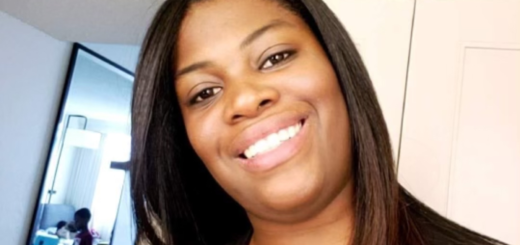
“Life on the Line”: 20/20 Reports on Denise Amber Lee Case October 10 2025

ABC’s 20/20 episode titled “Life on the Line,” airing Friday, October 10, 2025, delivers an in-depth look into the tragic 2008 kidnapping and murder of 21-year-old mother Denise Amber Lee. Co-anchor Deborah Roberts leads the broadcast, examining the chilling details of Denise’s abduction, the cascade of failed 911 responses, and the aftermath that led to sweeping calls for public safety reform.
The special episode includes emotional interviews with Denise’s now-teenage sons, Noah and Adam, who appear publicly for the first time, and her husband Nathan Lee, who founded the Denise Amber Lee Foundation. The two-hour program captures the urgent race against time as Denise tried to save herself using her kidnapper’s phone, and how a system designed to protect her fell short at every level.
- Where is Michael Lee King Now? 2025 Update & Background
- What Happened to Denise Amber Lee? 2025 Update & Background
Contents
A Bright Life Interrupted
Denise Amber Lee was a young mother in North Port, Florida, known for her devotion to her two young sons and her deep bond with her husband, Nathan. On January 17, 2008, she was home with her children, enjoying a sunny afternoon while trimming her toddler’s hair. Around 2 p.m., her normal routine was shattered when Michael King, a stranger with a history of personal instability, arrived in her neighborhood and abducted her from her home.
Nathan returned home later that afternoon to find both of their children left unattended and Denise missing. He immediately contacted law enforcement, launching a desperate and time-sensitive search. Denise’s father, Rick Goff, a veteran sheriff’s detective, mobilized law enforcement at the local and state level, setting off a cooperative but ultimately flawed search effort.
A Chain of 911 Calls
Over the next several hours, a series of five 911 calls were placed. Denise herself managed to place one of the calls using her abductor’s cell phone, pleading for help and answering questions while pretending to speak to her kidnapper. Her calm under pressure and strategic thinking gave investigators critical clues about her situation, though she couldn’t identify her exact location due to the use of a prepaid phone.
Another pivotal call came from Jane Kowalski, a witness who had unknowingly driven alongside the car Denise was in. Kowalski reported hearing terrifying screams and described seeing a hand slam against the window of the Camaro. However, her call, routed to the wrong county’s 911 center, was never properly escalated. This critical failure would later become a centerpiece in the case’s public outcry and legal reform efforts.
The Search Ends in Tragedy
Despite the multiple emergency calls and visible clues reported by the public, law enforcement was unable to locate Denise in time. Her body was found two days later on January 19, 2008, buried in a shallow grave. It was later revealed that Michael King had taken her to his home where he assaulted her, then drove her around for hours before committing murder.
King had also stopped at his cousin’s house to borrow a shovel, gas can, and flashlight. While he briefly stepped away, Denise managed to make the 911 call that would later serve as vital evidence in his trial. Though she followed protocol and displayed exceptional bravery, the response system failed to act quickly or cohesively enough to prevent her death.
Trial and Sentencing
The trial for Michael King began in August 2009. The prosecution presented overwhelming forensic and circumstantial evidence, including DNA, duct tape, items belonging to Denise, and a shell casing. Denise’s voice, captured on the 911 call, played a central role in the prosecution’s case, providing irrefutable proof of her captivity and murder.
King’s defense attempted to introduce doubt, suggesting contamination of evidence or that someone else might have been responsible. However, the jury took just over two hours to convict him on all counts: kidnapping, sexual battery, and first-degree murder. A week later, the jury unanimously recommended the death penalty. Michael King remains on death row at Union Correctional Institution in Raiford, Florida.
A Legacy of Reform
Denise’s story didn’t end with a conviction. The mishandling of the 911 calls, particularly Jane Kowalski’s, exposed a systemic failure in emergency communication protocols. In response, the Florida Legislature passed the Denise Amber Lee Act in April 2008, requiring voluntary training for 911 operators. Her family, especially her husband Nathan Lee and father Rick Goff, have continued to advocate for mandatory national standards.
The Denise Amber Lee Foundation was created in June 2008 and remains active in pushing for reforms, educating dispatchers, and raising public awareness. The foundation emphasizes that every emergency call must be met with competent, compassionate, and coordinated response — a mission born from Denise’s final, courageous actions.
Conclusion
The 20/20 special “Life on the Line” revisits a harrowing crime that should never have ended in tragedy. Through powerful storytelling and firsthand accounts, the episode underscores the human cost of a flawed emergency system and highlights how one family turned personal loss into a nationwide campaign for change. Denise Amber Lee’s legacy now lives on not only through her family, but through every 911 dispatcher who answers the call better trained and more prepared because of her story.
More “Life on the Line”
- “Life on the Line”: 20/20 Reports on Denise Amber Lee Case October 10 2025
- Where is Michael Lee King Now? 2025 Update & Background
- What Happened to Denise Amber Lee? 2025 Update & Background
More Feature Articles
- “The Prince, The Whiz Kid & The Millionaire”: Dateline Reports on Clifford Lambert Homicide October 10 2025
- “Life on the Line”: 20/20 Reports on Denise Amber Lee Case October 10 2025
- “A Death in the Stairwell”: 48 Hours Investigates the Alison Davis Case October 11 2025
- 60 Minutes Reports on “The China Hack”, “Booms, Busts and Bubbles” & “The Road to Damascus” October 12 2025