


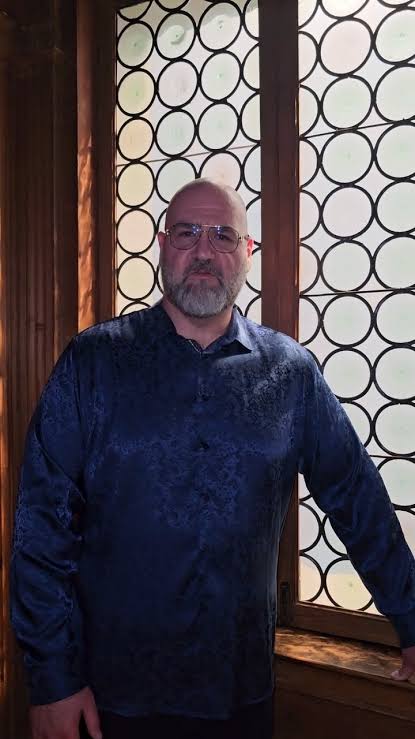
Anthony DiPippo spent approximately two decades in prison after being convicted of murdering 12-year-old Josette Wright, a schoolgirl who disappeared from Putnam County, New York, in October 1994. His conviction became the subject of years of legal challenges involving disputed witness testimony, allegations of police misconduct and evidence concerning another potential suspect.
His case is revisited in ABC’s 20/20 special “Hiding Beneath the Surface: The Putnam County School Girls,” airing Friday, November 13, 2026, at 9/8c. The two-hour investigation examines Josette’s murder, the disappearance of 17-year-old Robin Murphy in April 1995 and the criminal proceedings that resulted in the acquittals of DiPippo and his co-defendant, Andrew Krivak.
DiPippo was convicted in 1997 and sentenced to a lengthy prison term. He maintained his innocence while challenging the evidence that had placed him behind bars. His legal battle exposed questions about the reliability of prosecution witnesses and whether information concerning an alternative suspect had been excluded from his trial.
In October 2016, a jury acquitted DiPippo at a retrial, ending his imprisonment after approximately 20 years. He pursued civil litigation over his wrongful conviction and reached a reported $12 million settlement with Putnam County in 2020.
As of November 2026, DiPippo is a free man whose murder conviction has been overturned. His precise residence and current occupation have not been established in the available public information.
- “Hiding Beneath the Surface: The Putnam County School Girls”: 20/20 Reports on Josette Wright & Robin Murphy November 13 2026
- Who Is Andrew Krivak & Where Is He Now? 2026 Update & Profile
Contents
- Who Is Anthony DiPippo?
- The Murder of Josette Wright in 1994
- How Anthony DiPippo Became a Murder Suspect
- The Testimony of Denise Rose
- Anthony DiPippo Convicted in 1997
- The Years Anthony DiPippo Spent in Prison
- The First Conviction Overturned in 2011
- Anthony DiPippo Convicted a Second Time in 2012
- The Howard Gombert Evidence
- The New York Court of Appeals Orders Another Trial
- The Third Trial and October 2016 Acquittal
- Anthony DiPippo’s First Days of Freedom
- Anthony DiPippo’s Relationship With Jeffrey Deskovic
- Anthony DiPippo Helps Andrew Krivak Fight His Conviction
- Anthony DiPippo’s Civil Rights Lawsuit
- The $12 Million Putnam County Settlement
- The Allegations of Police Misconduct
- Anthony DiPippo’s Story Revisited in 2026
- Where Is Anthony DiPippo Now in November 2026?
- Did Anthony DiPippo Receive Justice?
- Anthony DiPippo’s Case in 20/20’s Hiding Beneath the Surface
- What Happened to Anthony DiPippo?
- More “Hiding Beneath the Surface: The Putnam County School Girls’
- More Feature Articles
Who Is Anthony DiPippo?
Anthony DiPippo is a New York man who was convicted in connection with the 1994 murder of Josette Wright and acquitted after spending approximately two decades in prison.
He became a central figure in one of Putnam County’s most disputed criminal cases after investigators accused him and Andrew Krivak of involvement in the death of the 12-year-old girl.
DiPippo was a young man when he became the subject of the investigation. The prosecution relied on witness testimony and statements that purported to connect him to Josette’s disappearance and killing.
His conviction in 1997 resulted in a lengthy prison sentence, separating him from his family and the life he had known before his arrest.
During his imprisonment, DiPippo maintained that he had not murdered Josette. His legal challenges focused on the credibility of the evidence used to convict him and the exclusion of information that could have supported his defence.
His case attracted attention because the original conviction was followed by extensive litigation, a retrial and an acquittal.
DiPippo’s release in 2016 marked the end of approximately 20 years of imprisonment, although it did not resolve the question of who murdered Josette Wright.
The Murder of Josette Wright in 1994
Josette Wright was 12 years old when she disappeared from Carmel, New York, on October 3, 1994.
Her mother reported her missing on October 4 after Josette failed to return home.
The disappearance prompted an investigation into her movements and the people who might have encountered her before she vanished.
For more than a year, authorities were unable to establish what had happened to the missing girl.
On November 22, 1995, a hunter discovered human remains in a wooded area of Putnam County.
Investigators identified the remains as Josette’s and classified her death as a homicide.
The passage of time between her disappearance and the discovery of her remains created substantial forensic difficulties.
Investigators relied on witness accounts and statements as they attempted to reconstruct the circumstances of the murder.
The investigation led to criminal charges against DiPippo and Andrew Krivak, whose convictions would become the subject of decades of litigation.
How Anthony DiPippo Became a Murder Suspect
Investigators began examining DiPippo after receiving information from people who claimed to know about Josette Wright’s death.
Witness statements became central to the developing prosecution because the physical evidence did not provide a complete reconstruction of the crime.
Among those who supplied information was Dominick Neglia, whose statements helped direct investigators towards DiPippo and Krivak.
The prosecution also relied on accounts from people who claimed to have witnessed or possessed information about the killing.
DiPippo denied responsibility for Josette’s death.
His defence challenged the reliability of the allegations and questioned whether investigators had obtained accurate statements from the witnesses.
The case developed around competing accounts of events that had occurred years before the trial.
Those disputes would become significant during later legal proceedings, when several witnesses recanted or challenged aspects of their original statements.
The reliability of the evidence became one of the defining issues in DiPippo’s effort to overturn his conviction.
The Testimony of Denise Rose
Denise Rose, who had dated Anthony DiPippo, became an important witness in the prosecution’s case.
She testified that she had witnessed the sexual assault and killing of Josette Wright inside a van.
Her account was used to connect DiPippo and Andrew Krivak to the murder.
Because the remains had been discovered more than a year after Josette disappeared, testimony describing the alleged crime carried substantial importance.
The defence questioned Rose’s credibility and the circumstances surrounding her statements.
Her account was examined alongside testimony from other witnesses whose reliability would become the subject of legal challenges.
Rose maintained her allegations, but other witnesses recanted portions of their statements during subsequent proceedings.
The disputes raised questions about whether the prosecution had presented a reliable reconstruction of Josette’s death.
DiPippo continued denying involvement and challenged the evidence used to secure his conviction.
Anthony DiPippo Convicted in 1997
In 1997, Anthony DiPippo was convicted in connection with Josette Wright’s murder.
The verdict resulted in a lengthy prison sentence and established the prosecution’s original account of his criminal responsibility.
Andrew Krivak was convicted in separate proceedings arising from the same homicide investigation.
The convictions appeared to provide a resolution to a case that had begun with the disappearance of a 12-year-old girl.
DiPippo maintained his innocence following the verdict.
He challenged the prosecution’s evidence and pursued legal remedies intended to secure a new trial.
The case remained disputed because of questions about witness testimony and the handling of information concerning another possible suspect.
Over time, those questions became central to proceedings examining whether the original conviction could stand.
DiPippo’s imprisonment continued while his legal challenges moved through the courts.
The Years Anthony DiPippo Spent in Prison
DiPippo spent approximately 20 years incarcerated in connection with Josette Wright’s murder.
His imprisonment began when he was a young man and continued through a substantial portion of his adult life.
During those years, he remained convicted of a crime he maintained he had not committed.
His legal challenges required repeated examination of the original investigation, witness statements and decisions made during the prosecution.
The case became part of a wider discussion about wrongful convictions and the consequences of unreliable testimony.
DiPippo’s efforts to obtain a new trial focused on whether jurors had received a complete account of the evidence.
His defence argued that information concerning another potential suspect should have been available to the jury.
The litigation continued for years before the courts permitted his case to be reconsidered.
His eventual acquittal ended his imprisonment but could not restore the years he had spent in custody.
The First Conviction Overturned in 2011
In March 2011, a New York appellate court overturned DiPippo’s original conviction because his trial attorney had operated under a conflict of interest.
The attorney had represented Howard Gombert in an unrelated criminal case before representing DiPippo.
Gombert had been identified as a possible suspect during the investigation into Josette Wright’s murder.
The court found that DiPippo’s lawyer had failed to conduct a meaningful investigation into Gombert’s possible involvement.
The conflict deprived DiPippo of the effective legal representation required during a criminal trial.
The ruling set aside his conviction and ordered a new trial.
It was a major victory for DiPippo after years of imprisonment, but it did not result in his acquittal.
Prosecutors continued pursuing the case, and he faced another jury in 2012.
Anthony DiPippo Convicted a Second Time in 2012
DiPippo’s second trial took place in 2012, following the reversal of his original conviction.
The prosecution presented testimony concerning Josette Wright’s murder, including the account of Denise Rose.
By that stage, other witnesses had recanted statements used during the original proceedings.
William MacGregor and Adam Wilson challenged their earlier accounts and alleged that investigators had pressured them to implicate DiPippo and Krivak.
The defence attempted to introduce evidence involving Howard Gombert, including allegations that he had made statements about Josette’s death.
The trial judge excluded significant portions of the proposed alternative-suspect evidence.
DiPippo was convicted for a second time of second-degree murder and first-degree rape.
He received another sentence of 25 years to life imprisonment.
His defence challenged the exclusion of evidence concerning Gombert, arguing that the jury had been prevented from considering information that could raise reasonable doubt.
That issue became the foundation of his next successful appeal.
The Howard Gombert Evidence
Howard Gombert became an important alternative suspect during DiPippo’s legal challenges.
Gombert had a history of sexual offences involving girls and young women. Defence attorneys argued that aspects of his conduct warranted examination in connection with Josette’s murder.
A witness had reported seeing Josette enter a vehicle driven by Gombert on the day she disappeared.
Investigators examined the vehicle but did not recover physical evidence establishing his involvement in the killing.
The defence also obtained allegations from Joseph Santoro, who had been incarcerated with Gombert.
Santoro claimed that Gombert had discussed Josette’s death and made statements suggesting that other men had been convicted of a crime he committed.
Those allegations were contested and did not constitute a judicial finding of Gombert’s guilt.
DiPippo’s lawyers argued that the evidence was relevant because it could provide jurors with a reasonable alternative to the prosecution’s theory.
Gombert was not convicted of murdering Josette Wright.
The New York Court of Appeals Orders Another Trial
In March 2016, the New York Court of Appeals reversed DiPippo’s second conviction.
The court concluded that the defence should have been permitted to present evidence suggesting that Howard Gombert might have been responsible for Josette’s murder.
The ruling concerned DiPippo’s right to present a complete defence.
It did not establish that Gombert committed the crime or determine that every allegation against him was true.
The decision meant that DiPippo would face a third trial, this time with an opportunity to present evidence excluded from the 2012 proceedings.
The prosecution maintained its case against him.
The new trial created an important change in the evidence jurors would be allowed to consider.
For the first time, DiPippo’s defence could present a more extensive alternative-suspect argument.
The ruling came after approximately two decades of legal proceedings and imprisonment.
The Third Trial and October 2016 Acquittal
DiPippo’s third trial began in September 2016 in Putnam County.
He was 40 years old and had spent much of his adult life fighting the murder and rape allegations.
The prosecution maintained that DiPippo and Andrew Krivak were responsible for Josette Wright’s death.
The defence challenged the reliability of the witnesses and presented evidence concerning Howard Gombert.
Jurors heard testimony about Gombert’s alleged statements and accounts from women who described sexual abuse involving him.
The defence also examined the recantations of witnesses who had supported the original prosecution.
On October 11, 2016, the jury acquitted DiPippo of the charges.
The verdict ended the criminal case against him after three trials and two overturned convictions.
DiPippo was released from custody, ending approximately 20 years of imprisonment.
The acquittal did not identify Josette’s killer, but it established that DiPippo could no longer be held criminally responsible under the prosecution brought against him.
Anthony DiPippo’s First Days of Freedom
DiPippo’s release in October 2016 marked a major change after two decades in the criminal justice system.
He emerged from prison at the age of 40, having entered custody as a young man.
During an interview following his acquittal, DiPippo described sadness over the years he had lost and expressed a desire to make use of the life ahead of him.
He also discussed the possibility of attending law school.
The experience of fighting his conviction had given him firsthand knowledge of criminal proceedings, appeals and the difficulties faced by prisoners seeking to establish their innocence.
DiPippo received support from Jeffrey Deskovic, another New York man who had been wrongfully convicted of murder and rape.
Deskovic had been exonerated in 2006 and founded an organisation dedicated to helping people affected by wrongful convictions.
The two men developed a connection through their experiences and their involvement in efforts to challenge disputed criminal cases.
DiPippo’s release represented the beginning of rebuilding a life interrupted for approximately 20 years.
Anthony DiPippo’s Relationship With Jeffrey Deskovic
Jeffrey Deskovic became an important supporter during DiPippo’s fight for freedom.
Deskovic had spent 16 years imprisoned for a murder and rape he did not commit before DNA evidence helped establish his innocence.
After his exoneration, he founded the Jeffrey Deskovic Foundation for Justice.
The organisation works to challenge wrongful convictions and provide assistance to people seeking exoneration.
DiPippo sought support from Deskovic during his legal battle.
When the jury acquitted DiPippo in October 2016, the two men embraced in the courtroom.
Their connection continued after DiPippo’s release.
Deskovic’s organisation became involved in Andrew Krivak’s effort to overturn his conviction for the same murder.
DiPippo supported Krivak’s legal battle and remained connected to the case as his former co-defendant sought a new trial.
Anthony DiPippo Helps Andrew Krivak Fight His Conviction
Andrew Krivak remained convicted of Josette Wright’s murder after DiPippo was acquitted in 2016.
Krivak had been prosecuted in separate proceedings and continued serving his sentence while challenging the evidence against him.
DiPippo’s acquittal created new questions about Krivak’s conviction because both prosecutions arose from the same homicide investigation.
Evidence concerning Howard Gombert and disputed witness testimony became important to Krivak’s legal efforts.
The Jeffrey Deskovic Foundation helped assemble a legal team to challenge Krivak’s conviction.
DiPippo supported the effort and contributed financially towards arrangements that allowed Krivak to obtain release on bail while awaiting retrial.
Krivak was released to house arrest in October 2020.
His case proceeded to another trial in 2023.
On February 27, 2023, a jury acquitted Krivak.
DiPippo attended the proceedings and welcomed the verdict, which meant that neither man remained convicted of Josette Wright’s murder.
Anthony DiPippo’s Civil Rights Lawsuit
After his acquittal, DiPippo pursued compensation for the years he spent imprisoned.
In October 2017, he filed a federal civil rights lawsuit against Putnam County and individuals associated with the original investigation.
The lawsuit alleged misconduct involving witness statements, investigative practices and the handling of evidence.
DiPippo’s legal team argued that investigators had used coercive methods and unreliable testimony to build the prosecution’s case.
The allegations included claims concerning the treatment of witnesses and the failure to disclose information relevant to the defence.
The lawsuit also examined the role of detectives involved in the investigation.
In 2019, a federal judge allowed significant portions of the litigation to proceed after rejecting efforts to dismiss the case.
The civil proceedings gave DiPippo an opportunity to seek compensation beyond the criminal acquittal.
They also placed aspects of the original investigation under examination in a separate legal forum.
The $12 Million Putnam County Settlement
In August 2020, Putnam County agreed to settle DiPippo’s federal civil rights lawsuit for $12 million.
The settlement followed his acquittal in October 2016 and the civil litigation arising from his imprisonment.
DiPippo had alleged that investigative misconduct contributed to his wrongful conviction.
The agreement brought an end to the federal compensation dispute without requiring a further trial on those claims.
The $12 million settlement was not the only compensation associated with his case.
In 2018, DiPippo received approximately $2.9 million through the New York Court of Claims.
Together, the two awards amounted to approximately $14.9 million in reported compensation.
The payments addressed the legal consequences of his wrongful imprisonment but could not restore the years he spent incarcerated.
The settlement also marked a significant financial outcome in a case involving disputed witness testimony and two overturned convictions.
The Allegations of Police Misconduct
DiPippo’s civil litigation examined allegations concerning the conduct of investigators during the original murder inquiry.
His lawyers argued that detectives had pressured witnesses to provide statements implicating him and Andrew Krivak.
Several witnesses recanted their earlier accounts and described threats or pressure during questioning.
The defence also challenged the handling of information concerning Howard Gombert.
The allegations included claims that investigators had failed to disclose evidence that could have supported an alternative-suspect defence.
Questions arose concerning the methods used to interview witnesses and obtain statements.
The civil case described alleged practices involving intimidation, threats of prosecution and the use of disputed investigative techniques.
Those allegations became part of the broader examination of how DiPippo and Krivak had been convicted.
The courts’ decisions overturning DiPippo’s convictions addressed failures in legal representation and restrictions on his ability to present a defence.
His eventual acquittal and civil settlements brought the proceedings against him to a close.
Anthony DiPippo’s Story Revisited in 2026
DiPippo’s experience returned to public attention in 2026 through renewed reporting about Josette Wright’s murder and the wrongful convictions.
In September 2026, the Wrongful Conviction podcast released an episode featuring an interview with DiPippo.
The conversation had been recorded in 2017, approximately six months after his release from prison.
Host Jason Flom discussed DiPippo’s experience of imprisonment, his efforts to rebuild his life and the circumstances surrounding his exoneration.
The 2026 release also directed listeners towards Bone Valley, whose fifth season, The Devil’s Quarry, examined the Putnam County case.
The renewed attention reflected continuing interest in the investigation and the evidence involving Howard Gombert.
DiPippo’s story also forms part of ABC’s 20/20 investigation into Josette Wright and Robin Murphy.
The television special examines the two disappearances, the murder prosecution and the questions left unanswered after the convictions collapsed.
Where Is Anthony DiPippo Now in November 2026?
Anthony DiPippo is free following his October 11, 2016, acquittal and has no surviving conviction for Josette Wright’s murder.
He was released after approximately 20 years of imprisonment and received substantial compensation through civil proceedings.
His federal lawsuit against Putnam County resulted in a $12 million settlement in August 2020.
He also received approximately $2.9 million from the New York Court of Claims in 2018.
DiPippo has supported efforts to overturn Andrew Krivak’s conviction and has spoken about his experience with the criminal justice system.
His case continues to receive attention through true-crime reporting and programmes examining wrongful convictions.
His precise residential address, occupation and personal circumstances as of November 2026 have not been established through reliable public reporting.
There is no basis to identify a specific current employer or claim that he pursued the law degree he discussed after his release.
His documented public life since his acquittal has included advocacy, legal proceedings and support for others challenging wrongful convictions.
Did Anthony DiPippo Receive Justice?
DiPippo’s acquittal in October 2016 ended the criminal prosecution that had kept him imprisoned for approximately two decades.
His convictions for murder and rape were overturned, and the third jury found him not guilty.
The result allowed him to leave prison and begin rebuilding his life.
His subsequent civil litigation produced substantial financial compensation.
But the legal outcome could not reverse the personal consequences of losing approximately 20 years of freedom.
DiPippo had entered prison as a young man and emerged in middle age.
The case also left unresolved questions about the investigation into Josette Wright’s murder.
Andrew Krivak was acquitted in February 2023, meaning neither man remained convicted of the crime.
The acquittals removed the original legal conclusion concerning Josette’s death but did not identify her killer.
For DiPippo, the outcome was freedom and compensation. For Josette’s family, the murder remained without a surviving conviction.
Anthony DiPippo’s Case in 20/20’s Hiding Beneath the Surface
ABC’s 20/20 examines DiPippo’s conviction and acquittal as part of its investigation into the cases of Josette Wright and Robin Murphy.
The programme revisits Josette’s disappearance in October 1994 and the discovery of her remains in November 1995.
It examines the investigation that led to the convictions of DiPippo and Andrew Krivak in 1997.
The special also explores the disputed evidence, witness recantations and allegations involving Howard Gombert.
DiPippo’s legal battle became significant because his convictions were overturned on two separate occasions.
His third trial ended in acquittal in October 2016.
Krivak’s acquittal in February 2023 removed the remaining conviction arising from the original prosecution.
The programme places those legal outcomes alongside the unresolved disappearance of Robin Murphy, whose case has also attracted attention because of evidence involving Gombert.
The investigation examines how the two cases developed and why important questions remain more than three decades after the girls disappeared.
What Happened to Anthony DiPippo?
Anthony DiPippo was convicted in 1997 of second-degree murder and first-degree rape in connection with the death of 12-year-old Josette Wright.
He was sentenced to 25 years to life imprisonment.
His conviction was overturned in 2011 because his original trial attorney had a conflict of interest involving Howard Gombert, a potential alternative suspect.
DiPippo was convicted at a second trial in 2012, but that verdict was overturned in 2016 because the defence had been prevented from presenting relevant evidence concerning Gombert.
At his third trial, DiPippo was acquitted on October 11, 2016.
He left prison after approximately two decades and pursued compensation for his wrongful imprisonment.
He received approximately $2.9 million through the New York Court of Claims in 2018 and reached a $12 million settlement with Putnam County in 2020.
DiPippo supported Andrew Krivak’s efforts to overturn his conviction, which ended with an acquittal in February 2023.
As of November 2026, Anthony DiPippo remains a free man whose convictions have been overturned. His exact residence and current occupation have not been confirmed.
His case is revisited in ABC’s 20/20 special “Hiding Beneath the Surface: The Putnam County School Girls,” airing Friday, November 13, 2026, at 9/8c, with streaming availability on Disney+ and Hulu.
More “Hiding Beneath the Surface: The Putnam County School Girls’
- “Hiding Beneath the Surface: The Putnam County School Girls”: 20/20 Reports on Josette Wright & Robin Murphy November 13 2026
- Who Is Anthony DiPippo & Where Is He Now? 2026 Update & Profile
- Who Is Andrew Krivak & Where Is He Now? 2026 Update & Profile