


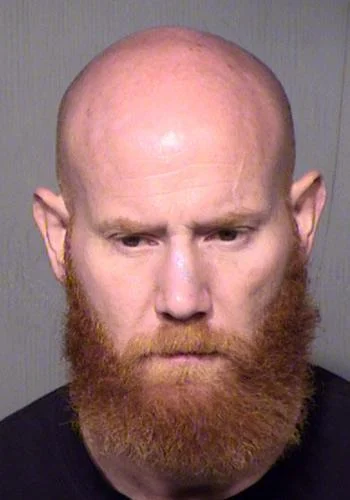
For three years after Allison Feldman was murdered inside her Scottsdale, Arizona, home, the man whose DNA police recovered from the crime scene had no name.
That changed in 2018, when a pioneering familial DNA search led investigators to Ian Mitcham, a Phoenix-area man whose brother’s DNA was already in a law-enforcement database. Police then discovered something that transformed their investigation: authorities still possessed blood collected from Mitcham during an unrelated DUI case.
Testing connected Mitcham directly to DNA recovered during the Feldman investigation. He was arrested in April 2018 and charged with killing the 31-year-old medical sales representative.
The arrest was only the beginning of an extraordinary legal process. Questions about how police obtained Mitcham’s DNA produced years of litigation, including a ruling that investigators had violated his Fourth Amendment rights. The dispute reached the Arizona Supreme Court and was presented to the U.S. Supreme Court before Mitcham finally stood trial.
In April 2026, more than a decade after Feldman’s murder, a jury found Ian Mitcham guilty of first-degree murder, sexual assault and second-degree burglary.
His case is not finished. As of October 2026, Mitcham remains convicted of Feldman’s murder, but his final sentence for first-degree murder has yet to be determined after the first jury considering the death penalty failed to reach a unanimous decision.
- “The Home Alone”: 20/20 Reports on Allison Feldman Homicide September 25 2026
- Who Was Allison Feldman & What Happened to Her? 2026 Update & Profile
Contents
- Who Is Ian Mitcham?
- Mitcham Had Previous Contact With Police
- Police Had No Suspect in Allison Feldman’s Murder
- A Familial DNA Search Leads Police to the Mitcham Family
- Police Discover They Already Have Mitcham’s Blood
- Ian Mitcham Is Arrested in April 2018
- Investigators Could Not Establish Why Mitcham Targeted Feldman
- The DUI Blood Sample Creates a Constitutional Fight
- A Judge Suppresses the DNA Evidence
- Higher Courts Put the DNA Back Into the Case
- Mitcham’s Later Felony Convictions Become Important
- Mitcham Takes the DNA Fight to the U.S. Supreme Court
- Ian Mitcham’s Murder Trial Begins
- Mitcham Maintains His Innocence
- Prosecutors Say the Evidence Points to Mitcham
- Ian Mitcham Is Convicted on All Counts
- Mitcham Becomes Eligible for the Death Penalty
- A Juror Is Removed During Death Penalty Deliberations
- The First Penalty Trial Ends in a Mistrial
- Mitcham Receives 10½ Years on the Other Charges
- Prosecutors Decide to Try the Death Penalty Phase Again
- Where Is Ian Mitcham Now?
- The Question Mitcham’s Conviction Did Not Answer
- More “Home Alone”
- More Feature Articles
Who Is Ian Mitcham?
Ian Mitcham was 42 years old when Scottsdale police arrested him on April 10, 2018, placing his birth around 1975 or 1976.
At the time of his arrest, Mitcham was living in the Phoenix area with family members and working at a deli. Nothing publicly known about his life provided investigators with an immediate explanation for why he would have encountered Allison Feldman.
That absence of a known connection became one of the persistent questions surrounding the case.
Investigators did not establish that Feldman and Mitcham had been friends, romantic partners, colleagues or regular acquaintances. Even after Mitcham was identified, police could not provide a clear relationship connecting the two before the night of Feldman’s murder.
Prosecutors also did not establish a definitive motive during Mitcham’s eventual murder trial.
Mitcham Had Previous Contact With Police
Mitcham was not completely unknown to law enforcement before Feldman’s murder investigation reached him.
He had previous misdemeanor arrests, including a 2015 DUI case. That arrest would become critical years later for a reason no one involved in the DUI case could have anticipated at the time.
Authorities collected two vials of Mitcham’s blood in connection with the DUI investigation.
One sample was intended for official testing. The second was available so that Mitcham could obtain independent testing if he chose to challenge the state’s results.
Mitcham received notice that the second vial would be destroyed after 90 days if no independent testing was requested.
It was not destroyed.
Instead, the blood remained in Scottsdale police custody for years.
That decision would eventually create both the strongest lead against Mitcham and one of the most important legal disputes in his murder prosecution.
Police Had No Suspect in Allison Feldman’s Murder
Feldman was killed inside her Scottsdale home on February 17, 2015.
Her boyfriend discovered her body the following day after her family became concerned when she stopped answering calls. When he entered the locked home using a key, he smelled bleach or chlorine before finding Feldman in a hallway.
The 31-year-old had been beaten, strangled and sexually assaulted. Her autopsy determined that she died from blunt-force trauma to her head combined with asphyxia from strangulation.
The killer had used bleach or another chlorine-based substance in an apparent attempt to destroy evidence.
Police still recovered biological evidence.
Investigators developed a DNA profile belonging to an unidentified man, but searching conventional law-enforcement databases produced no direct match.
For the next three years, Mitcham was not publicly identified as a suspect.
A Familial DNA Search Leads Police to the Mitcham Family
Investigators eventually turned to a forensic technique that had not previously solved an Arizona murder case: familial DNA searching.
Instead of looking only for an exact match to the unidentified crime-scene profile, familial searching looks for DNA profiles suggesting that someone already in a law-enforcement database could be a close biological relative of the unknown person.
The search produced a lead.
Investigators found a potential familial connection between the crime-scene DNA and Mark Mitcham, Ian Mitcham’s older brother.
Mark was already incarcerated and serving a lengthy sentence for a sexual offense.
The result did not mean Mark had killed Feldman. Instead, it suggested that the unidentified person whose DNA had been recovered from the crime scene could be one of his close relatives.
Police began examining the family.
Ian Mitcham became a focus.
Police Discover They Already Have Mitcham’s Blood
Once investigators focused on Ian Mitcham, they discovered the retained blood from his previous DUI case.
That gave police an opportunity to compare his DNA directly with the unidentified profile from Feldman’s home.
Investigators tested the blood.
The DNA profile matched the crime-scene evidence.
The familial search had provided the family connection. Testing Ian Mitcham’s blood provided the direct link investigators had been seeking since 2015.
Police later obtained a warrant to collect a buccal swab from Mitcham. DNA obtained from that sample also matched the evidence from the Feldman investigation.
For investigators, the three-year mystery of who had contributed the DNA inside Feldman’s home had an answer.
Ian Mitcham Is Arrested in April 2018
Scottsdale police arrested Mitcham on April 10, 2018.
He was 42 and working at a deli at the time.
Mitcham denied killing Feldman.
The following day, authorities charged him with first-degree murder and second-degree burglary. The prosecution eventually included a sexual assault charge connected to the attack.
The arrest attracted attention beyond Arizona because of how police had identified him. The Feldman investigation became the first Arizona murder case solved with the assistance of familial DNA searching.
Yet identifying Mitcham and convicting him proved to be two separate processes.
It would take almost another eight years before a jury returned its verdict.
Investigators Could Not Establish Why Mitcham Targeted Feldman
One of the unresolved elements of the case concerned motive.
Police found no established personal connection between Mitcham and Feldman.
The prosecution would later contend that Mitcham entered Feldman’s home, attacked and sexually assaulted her, killed her and took property before attempting to remove evidence with bleach.
Items prosecutors said disappeared from the home included Feldman’s phone, wallet, jewelry, house key and cash.
What prosecutors could not provide was a clear explanation for why Mitcham chose Feldman or how he came to be at her home.
The lack of a known relationship became part of the defense case when Mitcham eventually went to trial.
The DUI Blood Sample Creates a Constitutional Fight
The retained DUI blood that helped identify Mitcham also threatened the prosecution against him.
His attorneys challenged the legality of what police had done.
Mitcham had consented to blood collection and testing in connection with a DUI investigation. He had not consented to police retaining his blood for years and creating a DNA profile for an unrelated murder investigation.
The distinction raised a Fourth Amendment question.
Does police possession of a person’s biological sample give investigators the right to perform a different form of testing on that sample years later for another criminal investigation?
Mitcham’s attorneys argued that it did not.
In January 2023, a Maricopa County Superior Court judge agreed.
A Judge Suppresses the DNA Evidence
Judge Roy C. Whitehead ruled that police had exceeded the scope of Mitcham’s original consent.
Mitcham had agreed to blood testing related to alcohol or drugs following his DUI arrest. That consent did not authorize police to conduct DNA testing as part of a homicide investigation years later.
The court concluded that Mitcham retained a reasonable expectation of privacy in his blood and that police should have obtained a search warrant.
The judge therefore excluded the disputed DNA evidence.
It was a major victory for the defense.
The prosecution appealed.
Higher Courts Put the DNA Back Into the Case
In August 2023, the Arizona Court of Appeals reversed the suppression decision.
The dispute then moved to the Arizona Supreme Court, where the justices heard arguments in September 2024.
The state Supreme Court issued its ruling in December.
The court agreed that the police DNA testing presented a constitutional problem.
It concluded that creating Mitcham’s DNA profile from the retained blood constituted a search and that the warrantless search violated his Fourth Amendment rights.
But the court reached a different conclusion about what should happen to the evidence.
It ruled that the DNA could still be used because of the inevitable discovery doctrine.
Mitcham’s Later Felony Convictions Become Important
By the time the DNA dispute reached the Arizona Supreme Court, Mitcham’s legal circumstances had changed.
He had received unrelated felony convictions.
Arizona law requires qualifying convicted offenders entering the state prison system to provide a biological sample for DNA profiling. That profile is then entered into the state’s DNA system.
The Arizona Supreme Court reasoned that even if Scottsdale police had never tested the retained DUI blood, Mitcham’s DNA would have entered the system after his later felony convictions.
At that point, authorities would have obtained the same connection to the Feldman crime-scene evidence through a lawful source.
The court therefore applied the inevitable discovery exception and allowed prosecutors to use the DNA.
The ruling produced an unusual result: the court found that police had violated Mitcham’s constitutional rights but did not exclude the evidence obtained from the disputed testing.
Mitcham Takes the DNA Fight to the U.S. Supreme Court
Mitcham continued challenging the ruling.
His attorneys petitioned the U.S. Supreme Court, asking the nation’s highest court to review the DNA issue.
On April 28, 2025, the Supreme Court declined to hear the petition.
A decision not to hear a case does not mean the Supreme Court endorses every part of the lower court’s reasoning. It meant the Arizona ruling remained controlling in Mitcham’s case.
The DNA evidence could be presented to the jury.
More than seven years after his arrest, Mitcham was finally headed toward trial.
Ian Mitcham’s Murder Trial Begins
Jury selection began on October 20, 2025.
Opening statements followed on November 12.
Prosecutors argued that Mitcham was the man who entered Feldman’s Scottsdale home in February 2015, sexually assaulted her, beat and strangled her and then attempted to remove evidence using bleach.
The DNA evidence formed a central part of their case.
The state also presented other evidence, including bank records, witness testimony and information concerning Mitcham’s vehicle.
Prosecutors said property was removed from Feldman’s home, including jewelry, cash, her wallet, mobile phone and house key.
The trial stretched across months, with interruptions surrounding the Thanksgiving and year-end holiday periods.
Mitcham Maintains His Innocence
Mitcham did not admit killing Feldman.
His defense attorneys maintained that authorities had prosecuted the wrong man and challenged the conclusions police and prosecutors drew from the evidence.
The defense stressed that investigators had never established a relationship between Mitcham and Feldman.
Attorneys also argued that Scottsdale police had failed to investigate other possibilities and attempted to direct jurors’ attention toward another man who had lived near Feldman.
Police said they had no evidence connecting that man to the murder.
The defense also challenged the weight prosecutors placed on the DNA evidence, arguing that the presence of DNA did not establish the state’s entire account of the crime.
Mitcham continued maintaining his innocence through the verdict.
Prosecutors Say the Evidence Points to Mitcham
Closing arguments began on April 6, 2026.
Prosecutors argued that the case had to be considered as a whole rather than reducing it to one piece of evidence.
Their reconstruction placed Mitcham inside Feldman’s home and identified him as the person who sexually assaulted and killed her before trying to clean the scene.
The defense returned to its contention that the investigation had focused on the wrong man and that reasonable doubt remained.
Jurors received the case on April 7.
They began formal deliberations the following morning.
Their decision came on April 9.
Ian Mitcham Is Convicted on All Counts
The jury found Ian Mitcham guilty of first-degree murder, sexual assault and second-degree burglary.
Mitcham was 50 by the time the verdict was returned.
He had been arrested at 42.
The verdict came almost eight years after that arrest and more than 11 years after Feldman was killed.
Mitcham showed little visible reaction as the verdicts were announced. His defense team issued a statement saying that he continued to maintain his innocence and that their work representing him was not finished.
For prosecutors, the case then moved from determining guilt to determining punishment.
Because the state was seeking capital punishment, the same proceedings entered an aggravation and penalty phase.
Mitcham Becomes Eligible for the Death Penalty
The next phase began on April 15, 2026.
Jurors first had to determine whether prosecutors had established aggravating circumstances that could make Mitcham eligible for execution under Arizona law.
The jury found two aggravating factors.
One concerned a previous serious offense.
The other concerned the finding that Feldman’s murder was committed in a cruel manner.
Those findings allowed prosecutors to continue seeking a death sentence.
The case then moved into the penalty stage, where the prosecution and defense presented evidence and arguments concerning whether Mitcham should receive capital punishment.
A Juror Is Removed During Death Penalty Deliberations
The penalty jury began deliberating in May 2026.
A new problem then emerged.
The court learned that one juror had obtained information from outside the trial. Reports indicated that she had discussed life in prison with her boyfriend and had also conducted independent research.
Jurors are prohibited from investigating cases themselves or considering information that has not been introduced through the court proceedings.
The juror was removed.
An alternate juror took her place, and deliberations resumed with the reconstituted panel.
Even then, the jury could not reach a unanimous decision on imposing the death penalty.
The First Penalty Trial Ends in a Mistrial
On May 27, 2026, the court declared a mistrial in the penalty phase after jurors remained deadlocked.
The result did not overturn Mitcham’s convictions.
He remained convicted of first-degree murder, sexual assault and burglary.
Only his punishment for the murder remained unresolved.
That distinction is central to Mitcham’s current status. He is no longer an accused murderer awaiting determination of guilt. A jury has convicted him.
The unresolved question is whether his first-degree murder conviction will result in a life sentence or death sentence.
Mitcham Receives 10½ Years on the Other Charges
The court was able to sentence Mitcham separately for sexual assault and burglary.
On May 28, 2026, Judge Sunita A. Cairo sentenced him to 3½ years for second-degree burglary and a consecutive seven years for sexual assault.
That produced a combined sentence of 10½ years on those two convictions.
Mitcham received credit for 2,328 days already served, reflecting the years he had spent in custody while the case proceeded.
He was also ordered to register as a sex offender.
Those sentences did not resolve the punishment for Feldman’s murder.
Prosecutors Decide to Try the Death Penalty Phase Again
The mistrial forced the Maricopa County Attorney’s Office to decide whether it would continue seeking Mitcham’s execution.
On June 18, 2026, Maricopa County Attorney Rachel Mitchell announced that prosecutors would proceed with a second penalty trial.
The state would again seek the death penalty.
That means the next jury will not retry the evidence to determine whether Mitcham murdered Feldman. His first-degree murder conviction remains in effect.
The new proceeding concerns the sentence attached to that conviction.
Under the rules governing the case, another inability by a sentencing jury to reach the required decision would remove the death penalty as an option and result in a life sentence.
Where Is Ian Mitcham Now?
As of October 2026, Ian Mitcham remains in custody following his convictions for the murder, sexual assault and burglary of Allison Feldman.
He has already been sentenced to a combined 10½ years for the sexual assault and burglary convictions, with substantial credit for the time he spent incarcerated before sentencing.
His most consequential sentence remains pending.
Mitcham stands convicted of first-degree murder, and prosecutors continue to seek the death penalty. The first jury tasked with deciding whether to impose that punishment deadlocked, resulting in a mistrial limited to the penalty phase.
Prosecutors have announced that they will present the punishment question to another jury.
Until that process is completed, the final sentence attached to Mitcham’s murder conviction remains unresolved.
The Question Mitcham’s Conviction Did Not Answer
The prosecution ultimately persuaded jurors about who killed Allison Feldman.
It did not provide a definitive answer to another question surrounding the case for more than a decade: why?
No established relationship between Mitcham and Feldman emerged at trial, and prosecutors did not establish a clear motive explaining why he targeted the 31-year-old.
That made the DNA evidence central to the investigation.
For three years, police possessed a genetic profile without a name. Familial searching pointed them to Mark Mitcham. That led detectives to Ian Mitcham. The retained DUI blood then provided a direct DNA match.
The same blood sample generated years of constitutional litigation, a state Supreme Court ruling and an unsuccessful petition for U.S. Supreme Court review.
Mitcham continued to maintain his innocence.
A jury ultimately rejected the defense case.
On April 9, 2026, Ian Mitcham was convicted of first-degree murder, sexual assault and second-degree burglary in the death of Allison Feldman.
More than eight years after police first placed him under arrest, Mitcham remains behind bars.
The question of his guilt has been decided at trial.
The final question — whether he will spend his life in prison or receive a death sentence for Allison Feldman’s murder — remains before the Arizona court system.
More “Home Alone”
- “The Home Alone”: 20/20 Reports on Allison Feldman Homicide September 25 2026
- Who Was Allison Feldman & What Happened to Her? 2026 Update & Profile
- Who Is Ian Mitcham & What Happened to Her? 2026 Update & Profile
More Feature Articles
- “The Home Alone”: 20/20 Reports on Allison Feldman Homicide September 25 2026
- “Unmasking the Monster”: Dateline NBC Reports on Dana Beatty Case October 2 2026
- 48 Hours Pre-Empted October 3 2026 for UFC & College Football
- 60 Minutes Reports on “Who Needs Humans?”, “The Thom Tillis Tightrope” & “Saint Francis in the Cloud” on October 4 2026