


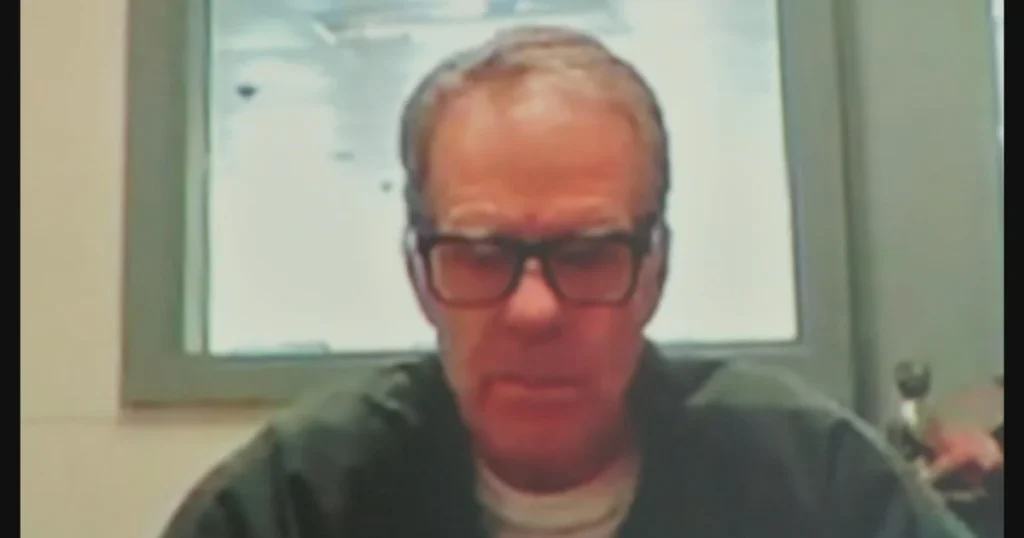
John William Carey spent decades outside prison after the 1986 murder of Salem State College student Claire Gravel before another strangulation attack brought him into the criminal justice system and created the DNA evidence that would expose his connection to her death.
Carey was 26 when Gravel was killed. She was 20, a college student from North Andover who had spent the night with friends in Salem before being dropped near her apartment. Her body was found in woods beside Route 128 in Beverly. She had been strangled with her own black tank top.
For almost 40 years, no one was convicted.
That changed after Carey attacked another woman in Hamilton, Massachusetts, in 2007. She survived. Carey was convicted of attempted murder in 2008 and required to provide a DNA sample. That profile was later connected to DNA preserved on the garment used to kill Gravel. Prosecutors secured a murder indictment in 2022.
On March 3, 2026, an Essex County Superior Court jury found Carey guilty of first-degree murder. On April 9, he was sentenced to life in prison without the possibility of parole.
- “The Salem Strangler”: 20/20 Reports on Claire Gravel Homicide September 25 2026
- Who Was Claire Gravel & What Happened to Her? 2026 Update & Profile
Contents
- Who Is John Carey?
- The 1986 Murder of Claire Gravel
- Carey Lived Free While the Gravel Case Remained Unsolved
- The 2007 Attack in Hamilton
- Carey Is Convicted of Attempted Murder
- The DNA Match That Changed Everything
- Why Carey Was Not Charged Until 2022
- Carey Is Indicted for Murder
- The Murder Trial Begins
- Prosecutors Said Carey Killed Gravel for a Strangulation Interest
- The Later Strangulation Attack Becomes Part of the Case
- Carey’s Defence Challenges the Case
- The Jury Finds Carey Guilty
- Carey Faces an Automatic Life Sentence
- Claire Gravel’s Family Confronts Carey
- Carey Is Sentenced to Life Without Parole
- Where Is John Carey Now?
- Carey Was Already a Prisoner When the Murder Case Caught Up With Him
- Could John Carey Ever Be Released?
- What About His 20-Year Attempted-Murder Sentence?
- The Label “Hamilton Strangler”
- Carey’s Life in Prison Before the Gravel Conviction
- What Carey Has Said About Claire Gravel’s Murder
- The Appeal Process
- Why Carey Was Identified After So Many Years
- Where John Carey’s Story Stands Today
- John Carey’s Role in 20/20’s “The Salem Strangler”
- More “The Salem Strangler”
- More Feature Articles
Who Is John Carey?
John William Carey was born on September 3, 1959. He grew up in Gloucester, Massachusetts, and graduated from Gloucester High School in 1977. Public reporting later identified him as having ties to Gloucester and Braintree.
Carey was 26 when Claire Gravel was murdered in June 1986. Authorities said there was no known relationship between the two. Prosecutors therefore did not present the case as a killing that grew out of a romance, friendship or family conflict.
That absence of a known relationship became important when DNA evidence was examined decades later. Prosecutors argued that Carey had no innocent reason for his genetic material to be on the shirt used to strangle Gravel.
By the time Carey stood trial for her murder in 2026, he was 66 and had already spent years in prison for another violent attack.
The 1986 Murder of Claire Gravel
Claire Gravel was a Salem State College student from North Andover. On the night of June 29, 1986, she went to Major Magleashe’s Pub on Washington Street in Salem with friends.
She was last seen alive between about 1:30 and 1:45 a.m. after being dropped near her apartment on Loring Avenue. Later, three workers found her body in woods beside the northbound side of Route 128 in Beverly.
The medical examiner determined that Gravel had been strangled.
Prosecutors later established that her black tank top had been used as the ligature. The garment would remain in evidence for decades and become the item that connected Carey to the killing.
Carey was not arrested for the murder at the time.
Investigators interviewed witnesses and persons of interest, followed leads and preserved evidence, but the case went cold.
Carey Lived Free While the Gravel Case Remained Unsolved
For years after Gravel’s death, Carey was not publicly identified as her killer.
Claire’s family continued waiting for answers while investigators returned to the case as technology changed.
The passage of time meant witnesses aged, memories weakened and investigators retired. The clothing recovered from Gravel remained available for examination.
That evidence became more valuable as DNA testing improved.
What investigators lacked was a known profile to compare against the genetic material preserved from the crime.
Carey would supply that profile because of a crime committed more than two decades later.
The 2007 Attack in Hamilton
In 2007, Carey attacked a woman in Hamilton, Massachusetts.
The victim survived.
Prosecutors said Carey attempted to kill his neighbor by strangling her. Reporting on the case has identified the survivor as Rosemarie Diskin. Carey was accused of using a necktie or similar ligature during the assault.
The method made the later connection to Gravel’s murder striking.
Both cases involved strangulation.
The difference was that Diskin lived.
Her survival gave prosecutors a living victim and enabled police to identify Carey as the attacker.
Carey Is Convicted of Attempted Murder
Carey was convicted of attempted murder in 2008.
He received a 20-year sentence for the Hamilton attack.
That conviction had a consequence beyond the prison term.
Carey was required to submit a DNA sample.
His profile was entered into the criminal justice system and became available for comparison with DNA from unsolved crimes.
At the time, investigators in the Gravel case had preserved biological material from her clothing.
The two cases could now intersect.
The DNA Match That Changed Everything
The breakthrough in the Gravel investigation came through DNA testing.
Prosecutors said Carey’s DNA was found on the black tank top used to strangle Gravel.
The significance went beyond a general DNA association.
The genetic material was on the item prosecutors said had been used as the murder weapon.
Deputy First Assistant District Attorney Kim Faitella described the evidence to jurors as Carey leaving his genetic blueprint on the garment used to kill Gravel.
Authorities also said Carey and Gravel did not know one another.
That left the defence with the task of explaining why his DNA was on the clothing used in the homicide.
Why Carey Was Not Charged Until 2022
Carey submitted his DNA after his 2008 conviction, but he was not indicted for Gravel’s murder for another 14 years.
The Essex County District Attorney’s Office said a new lead developed in 2012 and that prosecutors, Massachusetts State Police detectives and Salem and Beverly police continued working the case.
Cold-case prosecutions require more than identifying a possible suspect.
Investigators must establish the history of preserved evidence, confirm laboratory findings, examine alternative explanations, revisit witness statements and determine whether the case can still be proved beyond a reasonable doubt decades after the crime.
The surviving physical evidence became the foundation for that process.
In August 2022, prosecutors were ready to move.
Carey Is Indicted for Murder
On August 24, 2022, an Essex County grand jury indicted Carey for Claire Gravel’s murder.
He was 63.
At the time, he was already incarcerated on the attempted-murder conviction from the Hamilton attack.
Authorities said evidence recovered from Gravel’s clothing had been instrumental in solving the case.
Carey was then brought into the court system on the homicide charge.
For Claire’s family, the indictment marked the first time in 36 years that a man stood formally accused of killing her.
It would take several more years before a jury decided the case.
The Murder Trial Begins
Carey’s trial reached Essex County Superior Court in 2026.
The prosecution faced the challenges created by a four-decade-old murder.
There was no eyewitness to Gravel’s killing.
There was no known relationship between Carey and Gravel.
The exact circumstances under which the two encountered one another after Gravel was dropped near her apartment remained unclear.
Prosecutors built the case around the physical evidence preserved from the murder and the DNA result linking Carey to the tank top.
They also introduced evidence concerning his later attack on another woman.
Prosecutors Said Carey Killed Gravel for a Strangulation Interest
The prosecution argued that Carey strangled Gravel using her black tank top.
During closing arguments, Faitella told jurors that he had grabbed the garment, twisted it and used it to kill her. Prosecutors said the killing was connected to what they described as Carey’s sexual interest in strangulation.
That was the prosecution’s theory of motive.
The murder charge did not depend on jurors knowing every step between Gravel’s last confirmed sighting and her death.
The state needed to establish beyond a reasonable doubt that Carey killed her with the required state of mind for first-degree murder.
The DNA evidence supplied the strongest direct forensic link.
The Later Strangulation Attack Becomes Part of the Case
The survivor of Carey’s 2007 attack testified at his murder trial.
Her evidence connected jurors to the crime that had led to Carey’s DNA entering law-enforcement databases.
The later attack also involved strangulation.
That did not by itself prove Carey had killed Gravel in 1986, but prosecutors were permitted to present evidence relevant to their case under the court’s evidentiary rulings.
The significance of the Hamilton case was indisputable in another respect.
Without Carey’s conviction and required DNA submission, investigators might not have obtained the comparison that identified him in the Gravel evidence.
Carey’s Defence Challenges the Case
Carey denied killing Gravel.
His lawyers challenged the prosecution’s reconstruction and questioned parts of the original investigation.
The defence argued that police had failed to pursue certain suspects or possibilities with enough depth when the murder occurred.
That argument placed the age of the case at the centre of the defence.
The investigation had been conducted in 1986.
Carey was being tried in 2026.
But the prosecution countered that the physical evidence had survived and could be tested with methods unavailable to the original detectives.
The jury had to decide whether that evidence proved Carey was the killer despite the time that had passed.
The Jury Finds Carey Guilty
On March 3, 2026, the jury found John Carey guilty of murder in the first degree.
Reporting on the verdict said the jury found first-degree murder with extreme atrocity or cruelty.
The conviction came almost 40 years after Gravel’s death.
District Attorney Paul Tucker credited investigators and prosecutors who had worked the case across generations and said advances in science and technology had allowed the preserved evidence to provide the answer the original investigators could not reach.
For Claire’s family, the verdict resolved the central question that had followed them since 1986.
A jury had identified her killer.
Carey Faces an Automatic Life Sentence
Massachusetts law left the sentencing judge with no discretion to set a parole-eligible term for the first-degree murder conviction.
Because Carey was an adult when Gravel was killed, first-degree murder carried life in prison without the possibility of parole.
He returned to court on April 9, 2026.
Carey did not speak during the sentencing hearing.
Claire’s relatives did.
Her father, then 90, and five siblings attended court and described the effect the murder had had on their family.
Claire Gravel’s Family Confronts Carey
Claire’s sister Denise Foley told the court that she had waited 39 years, nine months and nine days for the sentencing.
She described nightmares she had experienced after her sister’s murder and the burden of knowing Claire had died without her family there to help.
Other siblings spoke about the future that Claire lost.
They remembered her plans to study law, have children, travel and build a life.
Her brother James described her as a source of light within the family.
The victim-impact statements moved the focus away from forensic science and back to the person whose death had created the case.
Carey Is Sentenced to Life Without Parole
Judge Jeffrey T. Karp sentenced Carey to life in prison without the possibility of parole on April 9, 2026.
There is no parole hearing waiting at the end of a minimum term.
Unless the murder conviction is overturned through the appellate process, Carey will remain incarcerated for the rest of his life.
His attorney said after sentencing that an appeal would be pursued.
Massachusetts first-degree murder convictions also receive review by the state’s Supreme Judicial Court.
As of September 2026, the conviction and sentence remain in effect.
Where Is John Carey Now?
As of September 2026, Carey is serving his life-without-parole sentence in the Massachusetts state prison system.
Boston 25 reported at his April sentencing that Carey was being sent to Souza-Baranowski Correctional Center in Lancaster, Massachusetts.
A separate prison-reform organization that lists Carey among its participants also identifies him as being housed at Souza-Baranowski.
Souza-Baranowski is a Massachusetts Department of Correction facility.
Carey had previously been incarcerated at MCI-Concord while serving the sentence for the 2008 attempted-murder conviction, but that was before his 2026 murder sentence. The Massachusetts Department of Correction directs members of the public to VINELink for current inmate location information because housing assignments can change.
The most recent public sources I found therefore place Carey at Souza-Baranowski Correctional Center.
Carey Was Already a Prisoner When the Murder Case Caught Up With Him
One of the unusual features of Carey’s case is that the murder prosecution did not take him from an ordinary life directly into prison.
He was already incarcerated.
His 2008 attempted-murder conviction had resulted in a 20-year sentence.
He was serving that term when prosecutors charged him with Gravel’s murder.
The DNA sample required because of the attempted-murder conviction became the evidence that turned his existing imprisonment into a life-without-parole sentence.
The later crime therefore did two things.
It put Carey behind bars for attacking another woman.
And it produced the forensic evidence that linked him to a killing committed 21 years before that attack.
Could John Carey Ever Be Released?
Under his current sentence, no.
Carey was sentenced to life without the possibility of parole.
That means the Massachusetts Parole Board cannot grant him ordinary parole on the Gravel murder sentence.
His route out of prison would require a change in the legal status of his conviction or sentence through appeal, post-conviction litigation or another extraordinary legal mechanism.
His defence said an appeal would be filed.
That does not suspend the sentence.
Carey remains a convicted murderer serving life without parole while the appellate process proceeds.
What About His 20-Year Attempted-Murder Sentence?
Carey was already serving a 20-year term for the Hamilton strangulation attack when he was convicted of killing Gravel.
The new life-without-parole sentence overtakes the practical significance of any release date that might have existed under the earlier sentence.
Even if the 20-year term reached its end, Carey would remain imprisoned under the murder judgment.
The prior conviction remains important because it explains how his DNA entered the system.
It also demonstrates that the prosecution of Gravel’s murder did not depend on forensic genealogy or a voluntary DNA submission.
Carey’s profile was available because he had already been convicted of another violent offence.
The Label “Hamilton Strangler”
Some reporting has referred to Carey as the “Hamilton Strangler.”
That label comes from the later attack in Hamilton and has appeared in media coverage of the Gravel case. It is not the name of a separate criminal charge.
ABC’s 20/20 uses “The Salem Strangler” as the title of its episode about the case.
The documented criminal record is more precise than either nickname.
Carey was convicted of attempted murder for the 2007 strangulation attack.
He was later convicted of first-degree murder for strangling Gravel in 1986.
Those two cases are linked by the method of attack and by the DNA evidence created after the later prosecution.
Carey’s Life in Prison Before the Gravel Conviction
Carey spent years incarcerated before he was charged with Gravel’s murder.
Public information about his prison life indicates that he participated in educational and rehabilitative programs while serving the earlier sentence.
A Massachusetts advocacy organization states that while at MCI-Concord, Carey completed a bachelor’s degree through Emerson College’s prison education program and participated in programs involving conflict reduction, tutoring, gardening, service-dog training and Bible study.
Those activities are part of his prison history.
They do not change the legal outcome of the Gravel case.
The 2026 jury determined that Carey committed first-degree murder, and the court imposed the mandatory sentence that followed.
He now faces incarceration for the remainder of his life.
What Carey Has Said About Claire Gravel’s Murder
Carey did not make a statement at his April 2026 sentencing.
He had contested the murder charge at trial and his defence challenged the prosecution’s case.
There has been no public confession to Gravel’s murder in the reliable sources reviewed for this profile.
The legal finding comes from the jury verdict rather than an admission by Carey.
That distinction matters.
Carey maintained his defence through trial.
The jury rejected it and convicted him.
His attorney’s stated intention to appeal also shows that the case continues through the appellate system even though the trial-court judgment is final unless disturbed on review.
The Appeal Process
Carey’s lawyer said an appeal would be submitted after sentencing.
First-degree murder cases in Massachusetts receive review by the Supreme Judicial Court.
That review can examine legal issues arising from the trial, including evidentiary rulings, jury instructions and other claims raised by the defence.
An appeal is not a new jury trial.
Nor does it mean the conviction has been set aside.
As of September 25, 2026, Carey remains convicted and is serving life without parole.
I found no reliable report indicating that his conviction has been reversed or his sentence changed.
Why Carey Was Identified After So Many Years
The path to Carey was not a single discovery.
It required several events separated by decades.
Police preserved Gravel’s clothing in 1986.
Carey committed another strangulation attack in 2007.
The victim survived.
Carey was convicted in 2008.
He was required to provide DNA.
Investigators were then able to compare that profile with evidence from Gravel’s tank top.
The state continued developing the cold case until a grand jury indicted Carey in 2022.
A jury convicted him in 2026.
The sequence shows how an unsolved murder can remain viable long after the original investigation has reached its technological limits.
Where John Carey’s Story Stands Today
John Carey is no longer a suspect in Claire Gravel’s murder.
He is a convicted first-degree murderer.
He is also a convicted attempted murderer from the 2007 Hamilton strangulation attack.
The second case produced the DNA sample that helped solve the first.
Carey was sentenced on April 9, 2026, to life imprisonment without parole for Gravel’s murder.
The latest public reporting places him at Souza-Baranowski Correctional Center in Massachusetts.
His defence has indicated that the murder conviction will be challenged on appeal.
Unless that challenge succeeds, Carey has no scheduled release date and no prospect of parole.
His sentence ends only with his death.
John Carey’s Role in 20/20’s “The Salem Strangler”
ABC’s 20/20 examines Carey’s story as part of “The Salem Strangler,” tracing the case from Gravel’s final night in 1986 through the later attack that supplied the evidence needed to identify him.
The episode shows how two women separated by more than 20 years became connected through the same man.
Claire Gravel did not survive her strangulation.
The woman Carey attacked in 2007 did.
That survival led to prosecution, conviction and DNA collection.
The DNA then took investigators back to the shirt preserved from Claire’s murder.
Four decades after Gravel was killed, Carey finally stood before a jury accused of her death.
The jury convicted him.
He is now serving life without parole, with the most recent public reporting placing him at Souza-Baranowski Correctional Center.
20/20: “The Salem Strangler” airs Friday at 9/8c on ABC and streams on Disney+ and Hulu.
More “The Salem Strangler”
- “The Salem Strangler”: 20/20 Reports on Claire Gravel Homicide September 25 2026
- Who Was Claire Gravel & What Happened to Her? 2026 Update & Profile
- Who Is John Carey & Where Is He Now? 2026 Update & Profile