


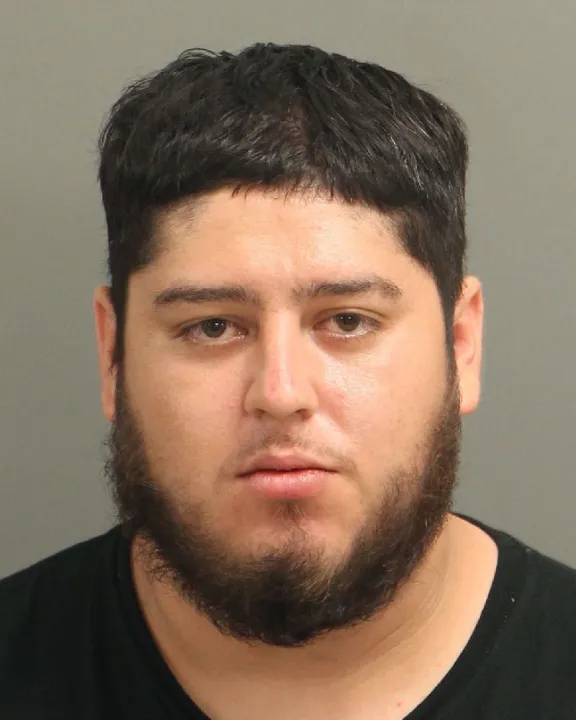
Miguel Salguero-Olivares is a Guatemalan-born man convicted of the 2012 rape and murder of University of North Carolina student Faith Hedgepeth, a crime that remained unsolved for nine years before advances in DNA technology led investigators to his identity.
On October 23, 2026, a Durham County jury found Salguero-Olivares guilty of first-degree murder, first-degree rape, first-degree sexual offense and first-degree burglary in connection with the killing of the 19-year-old biology student. He was sentenced to life imprisonment without the possibility of parole, plus additional consecutive prison sentences totalling 45 to 65 years.
The conviction came more than 14 years after Hedgepeth was found beaten to death inside an off-campus apartment near Chapel Hill, North Carolina. Prosecutors relied on DNA evidence, fingerprints and forensic testimony to establish Salguero-Olivares’ involvement, while his defence argued that investigators had misinterpreted the evidence and failed to consider alternative explanations.
His case is featured in ABC’s 20/20 episode “Justice for Faith,” airing Friday, October 30, 2026, at 9/8c, which examines the investigation, trial and verdict through interviews with jurors, investigators and people close to Hedgepeth.
- “Justice for Faith”: 20/20 Reports on Faith Hedgepeth Homicide October 30 2026
- Who Was Faith Hedgepeth & What Happened to Her? 2026 Update & Profile
Contents
- Who Is Miguel Salguero-Olivares?
- His Connection to the September 2012 Murder
- How DNA Evidence Led to His Arrest in 2021
- What Prosecutors Said Happened on the Night of the Murder
- The Forensic Evidence Presented Against Salguero-Olivares
- How His Defence Challenged the Murder Charges
- Why Miguel Salguero-Olivares Did Not Testify
- The October 23, 2026 Guilty Verdict
- What Sentence Did Miguel Salguero-Olivares Receive?
- Where Is Miguel Salguero-Olivares Now in 2026?
- Will Miguel Salguero-Olivares Appeal His Conviction?
- The Impact of His Conviction on Faith Hedgepeth’s Family
- Miguel Salguero-Olivares and ABC’s 20/20: Justice for Faith
- More “Justice for Faith”
- More Feature Articles
Who Is Miguel Salguero-Olivares?
Miguel Salguero-Olivares was born in Guatemala and moved to the United States in 2010, approximately two years before Faith Hedgepeth’s murder. He was 19 years old when the crime occurred in September 2012 and 33 when a jury convicted him in October 2026.
At the time of his arrest in September 2021, Salguero-Olivares was living in Durham, North Carolina. He was not enrolled at the University of North Carolina at Chapel Hill, where Hedgepeth was studying biology.
Public reporting has provided limited information about his childhood, education, employment and personal circumstances before his arrest. Much of what is known about his life comes from the criminal investigation and subsequent court proceedings.
Salguero-Olivares was not identified as a suspect during the early stages of the investigation. Police had spent years examining Hedgepeth’s relationships, interviewing people connected to her apartment complex and comparing DNA samples against the unidentified male genetic profile recovered from the murder scene.
Investigators had not established a documented personal relationship between Salguero-Olivares and Hedgepeth. Following his arrest, his mother told WRAL that her son had said he did not know the victim.
The question of how the two encountered each other became a significant issue during the trial, with prosecutors presenting a possible account of their interaction and defence attorneys challenging the conclusions drawn from the forensic evidence.
His Connection to the September 2012 Murder
Faith Hedgepeth was found dead on September 7, 2012, inside an apartment she shared with her friend Karena Rosario at the Hawthorne at the View complex near Chapel Hill.
The 19-year-old university student had returned to the apartment during the early morning hours after visiting a nightclub with Rosario. Her roommate left the residence at approximately 4:25 a.m., believing Hedgepeth was asleep in the bedroom.
When Rosario returned around 11 a.m. with another friend, she discovered Hedgepeth’s body. The student had suffered extensive head injuries and had been sexually assaulted.
Investigators recovered biological material from Hedgepeth’s body and other objects inside the apartment. They also found a blood-covered rum bottle believed to have been used in the fatal attack.
A handwritten message on a white paper takeout bag was recovered near the body. It contained the words “I’M NOT STUPID,” “BITCH” and “JEALOUS.”
Although investigators developed a male DNA profile, they could not identify the contributor through the investigative methods available to them at the time.
Salguero-Olivares remained unidentified in connection with the crime until 2021, when investigative genetic genealogy helped police narrow their search.
How DNA Evidence Led to His Arrest in 2021
The breakthrough in the Hedgepeth investigation came through genetic genealogy, a forensic technique that examines genetic relationships to identify potential relatives of an unknown DNA contributor.
Investigators used the DNA recovered from the murder scene to identify distant family connections. Those leads directed attention toward relatives of Miguel Salguero-Olivares.
According to court records and reporting from ABC11, investigators interviewed relatives and obtained DNA samples that helped narrow the search to Salguero-Olivares.
In August 2021, he was stopped by police in an unrelated driving-while-impaired investigation. Authorities obtained a DNA sample that prosecutors said matched biological material recovered from Hedgepeth’s body and the crime scene.
On September 16, 2021, Chapel Hill police announced that Salguero-Olivares had been arrested and charged with first-degree murder.
The arrest came nine years and nine days after Hedgepeth’s death.
Further forensic comparisons connected Salguero-Olivares to fingerprints and a palm impression recovered from objects inside the apartment, including the rum bottle identified as the suspected murder weapon.
He was held in the Durham County Jail as the prosecution developed its case. In November 2024, prosecutors added charges of first-degree rape, first-degree sexual offense and first-degree burglary.
Salguero-Olivares pleaded not guilty to the charges and contested the prosecution’s allegations.
What Prosecutors Said Happened on the Night of the Murder
During the October 2026 trial, prosecutors presented a theory concerning how Salguero-Olivares may have encountered Faith Hedgepeth before the killing.
They suggested that he could have attended a barbecue hosted by a neighbour near Hedgepeth’s apartment complex during the night of September 6 and the early hours of September 7, 2012.
According to the prosecution’s proposed account, Salguero-Olivares may have approached Hedgepeth and Rosario in the parking lot and made unwanted advances.
Prosecutors suggested that he could have returned to the apartment after Rosario left, motivated by anger or embarrassment following a rejection.
However, no eyewitness corroborated the proposed encounter, and the prosecution did not establish the precise circumstances of any meeting between Salguero-Olivares and Hedgepeth.
Prosecutor Angela Garcia-Lamarca acknowledged during closing arguments that jurors did not need to accept the proposed motive to find him guilty.
The prosecution maintained that the physical evidence established his responsibility for the sexual assault and murder, regardless of whether investigators could reconstruct every event preceding the attack.
The distinction became important because the defence argued that the prosecution had failed to establish when Salguero-Olivares encountered Hedgepeth and whether the biological evidence proved that he was responsible for the violence.
The Forensic Evidence Presented Against Salguero-Olivares
The prosecution’s case centred on DNA evidence recovered from Hedgepeth’s body, the suspected murder weapon and other objects inside the apartment.
Forensic scientists testified that Salguero-Olivares’ genetic profile matched biological material recovered during the investigation.
Erin Ermish, a forensic scientist with the North Carolina State Crime Laboratory, explained the statistical strength of the DNA comparisons.
According to the Associated Press, Ermish testified that DNA recovered from Hedgepeth’s body was 170 septillion times more likely under a proposed mixture involving Hedgepeth and Salguero-Olivares than under a comparison involving Hedgepeth and an unknown individual.
She also testified that a DNA mixture from the top of the rum bottle was 48.6 tredecillion times more likely under the prosecution’s proposed contributor combination than under a comparison involving two unknown, unrelated individuals.
These figures described the relative statistical support for competing DNA propositions. They were not direct measurements of the probability that Salguero-Olivares committed the murder.
Prosecutors presented additional evidence connecting him to the scene, including fingerprints and a palm impression recovered from bottles inside the apartment.
The medical examiner described Hedgepeth’s injuries, including extensive skull fractures and wounds to her face, head, arms and legs.
Prosecutors argued that the combined forensic evidence established Salguero-Olivares’ involvement in the fatal attack.
How His Defence Challenged the Murder Charges
Salguero-Olivares’ defence attorneys disputed the prosecution’s interpretation of the physical evidence and questioned aspects of the original investigation.
They argued that investigators had developed tunnel vision and failed to examine alternative explanations for the DNA and other evidence.
During closing arguments, attorney Jason Murphy suggested that Salguero-Olivares could have had consensual sexual contact with Hedgepeth before her death.
The defence maintained that the presence of DNA did not establish the precise timing of sexual contact or prove that Salguero-Olivares was responsible for the murder.
Attorneys also questioned the collection and preservation of evidence, including a missing sample from a possible bloodstain and areas of the apartment that investigators had not searched.
They challenged aspects of roommate Karena Rosario’s account of the night and argued that weaknesses in the investigation created reasonable doubt.
The defence also highlighted that DNA from sexual contact can remain detectable for days, meaning the presence of genetic material does not, by itself, establish when it was deposited.
Prosecutors rejected those arguments, maintaining that the combined DNA evidence, fingerprints and circumstances of the crime supported the charges.
Special prosecutor Lisa Coltrane argued that mistakes made during the investigation did not eliminate the forensic evidence linking Salguero-Olivares to the apartment.
Why Miguel Salguero-Olivares Did Not Testify
On October 21, 2026, Salguero-Olivares informed the court that he would not testify in his own defence.
The judge questioned him to confirm that he understood his constitutional right to testify and that the decision belonged to him rather than his attorneys.
Salguero-Olivares acknowledged that he understood those rights and confirmed that he had chosen not to take the witness stand.
His defence team then rested without calling witnesses, despite earlier indications that it might present a defence case.
Attorney James Rainsford asked the judge to dismiss the charges, arguing that the prosecution had failed to meet its burden of proof.
The judge denied the motion, allowing the case to proceed to closing arguments.
The decision not to testify did not constitute an admission of guilt. Under American criminal law, defendants are not required to testify or present evidence, and the prosecution must prove guilt beyond a reasonable doubt.
The jury was instructed to consider the evidence presented during the trial when determining whether the prosecution had established the charges.
The October 23, 2026 Guilty Verdict
Following closing arguments on October 22, jurors began deliberating over the four charges against Salguero-Olivares.
The jury deliberated for approximately six hours across two days before returning its verdict on Friday, October 23, 2026.
Salguero-Olivares was found guilty of first-degree murder, first-degree rape, first-degree sexual offense and first-degree burglary.
The verdict came more than 14 years after Hedgepeth’s death and five years after his arrest.
Jurors accepted the prosecution’s case that the forensic evidence established his responsibility for the crimes beyond a reasonable doubt.
The conviction marked the conclusion of a trial involving testimony from 23 prosecution witnesses, including investigators, forensic scientists, medical experts and people who knew Hedgepeth.
The jury’s decision brought an end to the trial phase of a case that had remained unresolved for much of the previous decade.
What Sentence Did Miguel Salguero-Olivares Receive?
Following the guilty verdict, Salguero-Olivares was sentenced to life imprisonment without the possibility of parole for first-degree murder.
The court imposed additional consecutive prison sentences totalling 45 to 65 years for the remaining convictions.
The punishment means that, unless the convictions or sentences are overturned or modified through legal proceedings, Salguero-Olivares will remain imprisoned for the rest of his life.
During sentencing, members of Hedgepeth’s family addressed the court and described the impact of her death.
Her mother, Connie Hedgepeth, said she had forgiven her daughter’s killer within three weeks of the murder. She expressed sympathy for Salguero-Olivares’ family despite the pain caused by the crime.
Faith’s father, Roland Hedgepeth, described his daughter as a source of hope in his life and spoke about the loss he had experienced since September 2012.
He also told the court that he forgave Salguero-Olivares, acknowledging that confronting the person convicted of the murder made the decision more difficult.
Defence attorney James Rainsford described the family’s statements as powerful and kind. He declined to make an extended statement about his client’s family during the hearing.
The sentencing concluded with Salguero-Olivares facing life imprisonment and substantial additional prison terms.
Where Is Miguel Salguero-Olivares Now in 2026?
As of October 29, 2026, Miguel Salguero-Olivares is in custody following his conviction and sentencing for the murder of Faith Hedgepeth. He is 33 years old and has been sentenced to life imprisonment without the possibility of parole.
Before his trial, Salguero-Olivares was held in the Durham County Jail, where he had remained in custody following his September 2021 arrest.
His sentencing on October 23, 2026, made him subject to a state prison sentence. The specific correctional facility where he is being held following sentencing has not been confirmed in the available reporting.
In North Carolina, individuals sentenced to state imprisonment are placed within the correctional system, with facility assignments determined through the state’s custody and classification procedures.
Salguero-Olivares’ life sentence means that he is not eligible for ordinary parole under the murder sentence imposed by the court.
His defence attorneys have indicated that they intend to appeal the convictions. An appeal could involve challenges to legal rulings, the admission of evidence or other aspects of the trial proceedings.
An appeal does not, by itself, overturn a conviction or suspend the sentence. Unless a court grants relief, Salguero-Olivares remains subject to the punishment imposed on October 23.
Will Miguel Salguero-Olivares Appeal His Conviction?
Following the verdict, Salguero-Olivares’ attorneys indicated that the convictions would be appealed.
The defence had challenged the reliability and interpretation of forensic evidence during the trial, as well as the conduct of the investigation and the prosecution’s proposed account of events.
Those issues could form part of appellate arguments, although the precise grounds of any appeal will depend on the filings submitted to the courts.
An appellate court examines alleged legal errors in the trial proceedings rather than conducting an automatic retrial of the case.
If the convictions are upheld, Salguero-Olivares will remain subject to the life sentence and additional prison terms.
If an appellate court finds an error that affected the fairness or legality of the proceedings, it could order further action, including a new trial or other relief.
As of October 29, 2026, no appellate ruling has overturned the verdict, and the October 23 convictions remain in effect.
The Impact of His Conviction on Faith Hedgepeth’s Family
The conviction brought a measure of legal accountability to a family that had waited more than 14 years for a verdict.
Faith Hedgepeth was 19 when she was murdered, a biology student who hoped to become a paediatrician and the first member of her family to graduate from college.
Her family had followed the investigation from its earliest stages, through years without an identified suspect, the September 2021 arrest and the five years of court proceedings that followed.
The trial required relatives to hear testimony about Faith’s injuries, the circumstances of her death and the forensic evidence recovered from the apartment.
Following the verdict, her parents spoke about their grief and their decision to forgive the man convicted of killing their daughter.
Their statements became a defining part of the sentencing hearing, reflecting the emotional consequences of a crime that had affected their family for more than a decade.
For investigators, the case demonstrated the role of forensic science and genetic genealogy in identifying suspects years after a crime.
For Faith’s family, the conviction established responsibility for her death but did not change the loss of a daughter whose education and future had been cut short.
Miguel Salguero-Olivares and ABC’s 20/20: Justice for Faith
ABC’s 20/20 revisits the case in “Justice for Faith,” airing Friday, October 30, 2026, at 9/8c.
The episode examines the murder investigation, the DNA evidence that led to Salguero-Olivares’ arrest and the trial that concluded with his conviction.
Exclusive interviews with jurors, investigators and Faith Hedgepeth’s friends provide perspectives on the evidence, the lengthy investigation and the effect of the verdict.
The programme also revisits the circumstances of Faith’s death and the questions that surrounded the case during the nine years before Salguero-Olivares was identified.
The October 2026 episode follows an earlier 20/20 investigation broadcast in September 2016, when authorities were still attempting to identify the unknown male DNA contributor.
With Salguero-Olivares convicted and sentenced, the new programme examines the case from the perspective of a completed criminal trial.
Miguel Salguero-Olivares remains imprisoned under a life sentence without parole, while the possibility of appellate proceedings represents the next stage of his legal case.
More “Justice for Faith”
- “Justice for Faith”: 20/20 Reports on Faith Hedgepeth Homicide October 30 2026
- Who Was Faith Hedgepeth & What Happened to Her? 2026 Update & Profile
- Who Is Miguel Salguero-Olivares & Where Is He Now? 2026 Update & Profile