


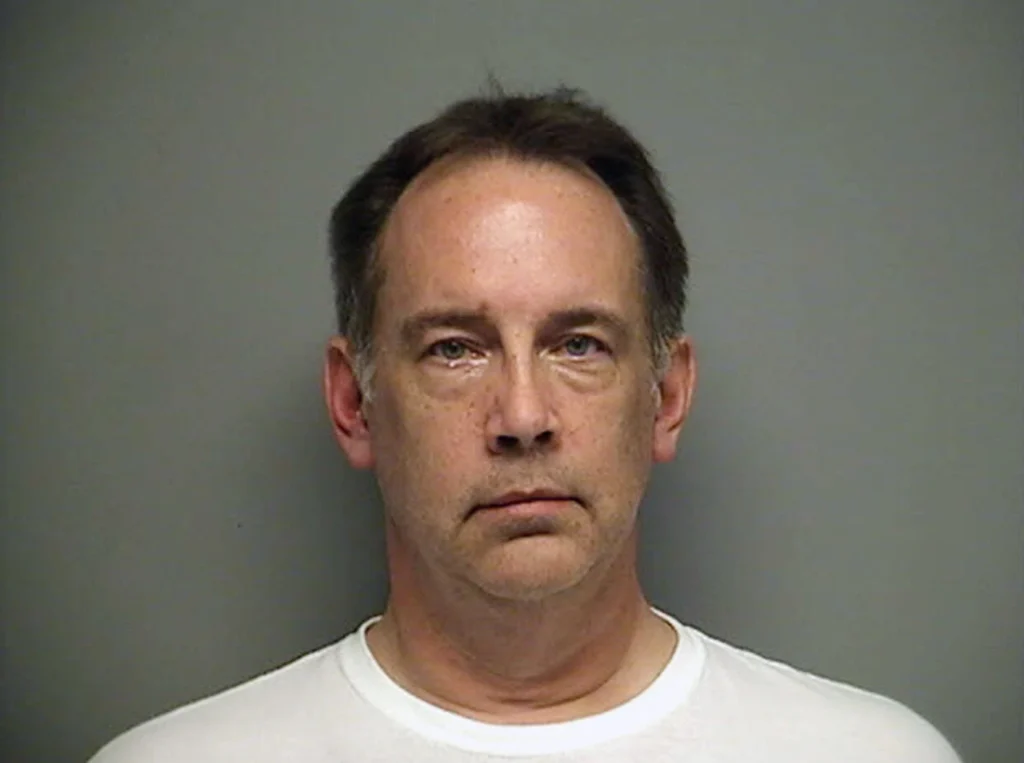
Zelich, who had previously served with the West Allis Police Department, admitted causing both deaths but maintained that the women died accidentally during consensual sexual encounters involving strangulation. Prosecutors pursued homicide charges, and he eventually pleaded guilty in Wisconsin and Minnesota, receiving prison sentences totalling 70 years.
His crimes are examined in ABC’s 20/20 episode “The Suitcase Murders,” airing Friday, October 16, 2026, at 9/8c. The investigation explores Zelich’s background, his relationships with the victims, the discovery that exposed the killings and the criminal proceedings that followed.
- “The Suitcase Murders”: 20/20 Reports on Steven Zelich Case & Jenny Gamez and Laura Simonson Homicides October 16 2026
- Who Was Jenny Gamez & What Happened to Her? 2026 Update & Profile
- Who Was Laura Simonson & What Happened to Her? 2026 Update & Profile
Contents
- Who Is Steven Zelich?
- Why Did Steven Zelich Leave the Police Department?
- Steven Zelich’s Online Activities and Connections With Women
- What Happened Between Steven Zelich and Jenny Gamez?
- How Did Steven Zelich Meet Laura Simonson?
- How Was Steven Zelich Caught?
- What Charges Did Steven Zelich Face?
- Steven Zelich’s Guilty Pleas and Prison Sentences
- Why Did Steven Zelich Appeal His Conviction?
- Where Is Steven Zelich Now in 2026?
- Did Steven Zelich Ever Admit to Murdering the Two Women?
- How Steven Zelich’s Crimes Affected the Victims’ Families
- Steven Zelich’s Case Featured on ABC’s 20/20
- More “The Suitcase Murders”
- More Feature Articles
Who Is Steven Zelich?
Steven Michael Zelich was born in 1961 and spent much of his adult life in southeastern Wisconsin. Before becoming a convicted murderer, he worked as a police officer in West Allis, a suburb of Milwaukee. His law enforcement background became a significant part of the public examination of his crimes after his arrest.
Zelich joined the West Allis Police Department in 1989 and served for approximately 12 years. His career ended in 2001 following allegations concerning his conduct toward women, including claims that he had used his position to pursue personal relationships and obtain information about women he encountered through police work.
After leaving the department, Zelich remained in Wisconsin and worked in private security. He lived in West Allis and maintained an outwardly conventional working life while developing online connections through communities associated with bondage and domination.
Those online activities eventually brought him into contact with Jenny Gamez, a teenager from Oregon, and Laura Simonson, a mother of seven from Minnesota. Both women travelled to hotels to meet Zelich, and both died during encounters involving strangulation.
Why Did Steven Zelich Leave the Police Department?
Zelich’s departure from law enforcement followed an internal investigation into allegations about his interactions with women. Department records described complaints that he had approached women through his official duties and subsequently attempted to establish personal or romantic contact.
Some allegations concerned the use of police resources to obtain information about women. Others involved claims of unwanted attention and intimidating conduct. The complaints raised questions about his professional judgment and whether he had misused the authority associated with his position.
In August 2001, Zelich resigned from the West Allis Police Department rather than continue through the disciplinary process. His resignation ended his career as a sworn police officer, more than a decade before the first of the two deaths for which he would be convicted.
Following his arrest in 2014, reporters examined his personnel records and the circumstances surrounding his resignation. His former employment attracted attention because the crimes involved prolonged concealment, encounters arranged through the internet and efforts to prevent authorities from discovering the victims.
However, the allegations associated with his police career were separate from the homicide prosecutions. They did not establish that he had committed the later crimes, and the available evidence does not demonstrate that he used particular law enforcement techniques to conceal the bodies.
Steven Zelich’s Online Activities and Connections With Women
After leaving the police department, Zelich participated in internet communities associated with bondage, domination and submission. Investigators subsequently discovered that both women whose bodies were recovered in Wisconsin had established contact with him through online connections.
One online profile attributed to Zelich expressed an interest in extreme domination, captivity and control. The profile attracted attention during the investigation because both deaths involved strangulation and restraints, although participation in consensual bondage activities was not itself evidence of criminal conduct.
The online connections allowed Zelich to meet women who lived considerable distances from his Wisconsin home. Jenny Gamez came from Oregon, while Laura Simonson lived in Minnesota. Neither woman was known to have had a personal connection to the other.
Investigators eventually established a pattern involving online contact, arrangements to meet at hotels, sexual encounters involving neck compression and deaths followed by concealment of the victims’ remains.
Zelich claimed that the women had consented to the sexual activities and that he had not intended to kill either of them. Prosecutors challenged his explanation, and the criminal proceedings established his responsibility for both deaths.
What Happened Between Steven Zelich and Jenny Gamez?
Jenny Gamez was 19 years old when she died in 2012. She had grown up in Oregon, spent part of her adolescence in foster care and become a mother while still a teenager. After leaving her foster family’s home, she established an online connection with Zelich.
The two arranged to meet in southeastern Wisconsin. Their encounter took place at a hotel in the Kenosha area, where Zelich later admitted that he had caused Gamez’s death through strangulation during sexual activity.
According to his account to investigators, the encounter involved restraints, a gag and a rope around Gamez’s neck. Zelich maintained that her death had been accidental, claiming that he lost control during the encounter rather than deliberately intending to kill her.
Instead of contacting emergency services, he placed Gamez’s body inside a suitcase and transported it to his home in West Allis. Investigative accounts described him concealing her remains at his residence, including storing them in a refrigerator before eventually moving the suitcase to his vehicle.
Gamez’s remains remained concealed for an extended period. Her death was not discovered when it occurred, and authorities did not identify her as a homicide victim until June 2014.
The concealment also meant that Zelich continued his daily life while retaining possession of her remains. More than a year after Gamez’s death, he established contact with Laura Simonson, leading to another fatal encounter.
How Did Steven Zelich Meet Laura Simonson?
Laura Simonson was a 37-year-old mother of seven from Farmington, Minnesota. She met Zelich through an online connection, and the pair arranged to spend time together at a hotel in Rochester, Minnesota, in November 2013.
Simonson checked into the Microtel Inn & Suites under her own name. Hotel records and surveillance material subsequently helped investigators establish that she had been with Zelich shortly before she disappeared.
According to Zelich’s statements, the encounter involved sexual activity that included a rope around Simonson’s neck. He claimed that she died accidentally during strangulation, providing an explanation similar to the one he later gave for Gamez’s death.
After Simonson died, Zelich placed her body inside a suitcase and transported it from Minnesota to Wisconsin. He concealed her remains alongside those of Gamez rather than reporting the death.
Simonson’s family became concerned when they could not contact her. A relative reported her missing on November 22, 2013, prompting investigators to reconstruct her final known movements.
Detectives identified Zelich as a person who had been with Simonson at the Rochester hotel. However, they did not initially have the evidence needed to establish what had happened to her.
Her disappearance remained unresolved until June 2014, when investigators discovered both women’s remains in Wisconsin.
How Was Steven Zelich Caught?
On June 5, 2014, a highway worker cutting grass beside a road in the Town of Geneva, Walworth County, Wisconsin, discovered two large suitcases concealed in roadside vegetation. An odor coming from the luggage prompted the worker to contact authorities.
Investigators opened the suitcases and discovered the decomposing remains of two women. The condition of the bodies indicated that they had been dead for an extended period, making identification and forensic examination challenging.
Dental records helped authorities identify the victims as Laura Simonson and Jenny Gamez. Simonson’s identification connected the discovery to an existing missing-person investigation in Minnesota, where detectives had already established her association with Zelich.
Gamez’s identification required additional work. Investigators released a composite image of the younger victim, which was recognized by people familiar with her. Dental records subsequently confirmed her identity.
The investigation involved cooperation between law enforcement agencies in Wisconsin, Minnesota and Oregon. Hotel records, online communications and Zelich’s statements helped detectives establish that both women had met the same man before their deaths.
When questioned, Zelich admitted that he had caused both deaths during sexual encounters involving strangulation. He also described placing the bodies inside suitcases, concealing them and eventually abandoning the luggage beside the Wisconsin road.
Authorities arrested Zelich in late June 2014. His admissions, combined with the evidence connecting him to both women, formed a central part of the subsequent criminal prosecutions.
What Charges Did Steven Zelich Face?
Zelich faced criminal proceedings in multiple jurisdictions because the deaths occurred in different states and the bodies were abandoned in a third Wisconsin county. The case involving Jenny Gamez was prosecuted in Kenosha County, Wisconsin, while Laura Simonson’s death was prosecuted in Minnesota.
The initial charges included concealing human remains. Prosecutors later pursued homicide charges based on Zelich’s admissions, the circumstances of the encounters and the evidence connecting him to both deaths.
A major issue in the Wisconsin case concerned whether prosecutors could introduce evidence about Simonson’s death while prosecuting Zelich for Gamez’s death. Prosecutors argued that the similarities between the encounters were relevant to his conduct and intent.
Zelich’s attorneys opposed the evidence, arguing that it could prejudice jurors. Judge Bruce Schroeder ultimately permitted prosecutors to introduce evidence from the Minnesota case, a decision that influenced the subsequent plea negotiations.
Steven Zelich’s Guilty Pleas and Prison Sentences
On January 25, 2016, Zelich pleaded guilty to first-degree reckless homicide and hiding a corpse in connection with Jenny Gamez’s death. The homicide charge had been amended from the original first-degree intentional homicide allegation.
On March 30, 2016, he received a sentence of 35 years in prison, followed by 10 years of extended supervision. The conviction established criminal responsibility for Gamez’s death without requiring a finding that he had specifically intended to kill her.
The Minnesota proceedings concerning Laura Simonson continued separately. On February 3, 2017, Zelich pleaded guilty to second-degree murder for her death and received a 25-year prison sentence, ordered to run consecutively to his Wisconsin term.
On October 13, 2017, Zelich received an additional 10-year sentence in Walworth County for concealing the bodies. The combined prison terms amounted to 70 years.
The sentences reflected the deaths of two women and the prolonged concealment of their remains. Zelich was in his mid-50s when the sentences were imposed, making the combined prison terms likely to keep him incarcerated for the rest of his life.
Why Did Steven Zelich Appeal His Conviction?
Despite pleading guilty, Zelich subsequently challenged his Wisconsin conviction for Jenny Gamez’s death. His post-conviction motion alleged that his attorneys had provided incorrect advice concerning his ability to appeal the trial court’s decision to admit evidence from Laura Simonson’s death.
Zelich claimed that he had been advised he could plead guilty while preserving his right to challenge the evidentiary ruling. Under Wisconsin law, a guilty plea generally waives the right to appeal certain pretrial decisions.
He maintained that he would have insisted on going to trial if he had understood the consequences of his plea. His argument concerned the effectiveness of his legal representation rather than a new forensic discovery or evidence identifying another suspect.
Judge Schroeder initially denied his request to withdraw the plea. However, Zelich appealed, arguing that the court had ended his post-conviction hearing before he could fully present his case.
On November 25, 2020, the Wisconsin Court of Appeals ruled that Zelich was entitled to complete the evidentiary hearing. The court concluded that his allegations, if proven, could establish ineffective assistance of counsel.
The appellate ruling did not overturn his homicide conviction or establish that his guilty plea was invalid. Instead, it required the lower court to examine the allegations through further proceedings.
Where Is Steven Zelich Now in 2026?
As of October 2026, Steven Zelich is understood to remain incarcerated under the lengthy prison sentences imposed for the deaths of Jenny Gamez and Laura Simonson and the concealment of their bodies.
Zelich would be approximately 65 years old in 2026. His aggregate prison sentences total 70 years, and there is no verified public information in the sources reviewed indicating that he has been released.
His exact current correctional facility could not be independently confirmed from an official inmate record. The Wisconsin Department of Corrections maintains an offender locator that can be used to verify an inmate’s current placement and custody information.
The legal position also requires a distinction between his original sentences and his subsequent appeal. The Wisconsin Court of Appeals ordered further consideration of his request to withdraw his plea in 2020, but the available sources do not establish the final outcome of those proceedings.
A more recent account of the case continues to describe his convictions and sentencing history, but it does not provide a verified final disposition of the Wisconsin post-conviction challenge.
Did Steven Zelich Ever Admit to Murdering the Two Women?
Zelich admitted causing both women’s deaths, but he maintained that neither killing had been intentional. His account was that both women died during consensual sexual encounters involving strangulation and restricted breathing.
That distinction was central to the criminal cases. His Wisconsin conviction for first-degree reckless homicide did not require proof of a specific intention to kill, while his Minnesota guilty plea resulted in a second-degree murder conviction.
His explanations also had to be considered alongside his conduct after the deaths. Rather than reporting either incident, he concealed the bodies, transported them across locations and retained possession of their remains for extended periods.
The Wisconsin appellate proceedings documented his account of the encounters and the prosecution’s argument that the similarities between the deaths were relevant to the case. The appellate court concluded that evidence of the second death had sufficient relevance to justify its admission in the Wisconsin prosecution.
How Steven Zelich’s Crimes Affected the Victims’ Families
The crimes left two families without answers for extended periods. Jenny Gamez’s relatives did not know that she had died in Wisconsin, while Laura Simonson’s family had reported her missing and waited months to learn what had happened.
The discovery of the suitcases brought both deaths to light, but it also revealed that Zelich had concealed Gamez’s remains for more than a year before Simonson’s death.
The sentencing proceedings provided an opportunity for family members to describe the impact of the killings. Their statements addressed not only the deaths but also the suffering caused by Zelich’s decision to conceal the bodies.
The investigation ultimately established the connection between two women from different states who had encountered the same man. Their identification, the recovery of their remains and Zelich’s admissions allowed prosecutors to pursue separate homicide cases.
Steven Zelich’s Case Featured on ABC’s 20/20
The investigation is revisited in 20/20’s “The Suitcase Murders,” airing Friday, October 16, 2026, at 9/8c on ABC.
The episode examines how the discovery of two suitcases beside a Wisconsin road exposed deaths that had occurred more than a year apart. It also explores Zelich’s previous career in law enforcement, the online relationships that brought him into contact with the victims and the evidence that connected him to both women.
The case attracted national attention because of the circumstances surrounding the bodies, the extended concealment and Zelich’s former position as a police officer. His claims that both deaths were accidental became a central issue in the criminal proceedings.
More than a decade after the suitcases were discovered, Zelich’s case remains an example of how separate missing-person investigations can become connected through forensic identification, digital evidence and cooperation between law enforcement agencies.
The outcome was a series of guilty pleas and decades of imprisonment. Although Zelich later challenged his Wisconsin plea, the documented appellate ruling did not exonerate him or overturn the findings underlying his convictions. His precise current prison location and the final outcome of that post-conviction challenge remain unverified in the sources reviewed.
More “The Suitcase Murders”
- “The Suitcase Murders”: 20/20 Reports on Steven Zelich Case & Jenny Gamez and Laura Simonson Homicides October 16 2026
- Who Is Steven Zelich & Where Is He Now? 2026 Update & Profile
- Who Was Jenny Gamez & What Happened to Her? 2026 Update & Profile
- Who Was Laura Simonson & What Happened to Her? 2026 Update & Profile
More Feature Articles
- “The Suitcase Murders”: 20/20 Reports on Steven Zelich Case & Jenny Gamez and Laura Simonson Homicides October 16 2026
- “The Betrayal of Kirby Carpenter”: Dateline NBC Reports October 16 2026
- “The Corn Rake Witness”: 48 Hours Reports on Amy Mullis Homicide October 17 2026
- “The Detective & the Chewing Gum Sting”: 48 Hours Reports on How Mitchell Gaff Was Caught for the Homicides of Judy Weaver and Susan Vesey October 17 2026