
Who Was Allison Feldman & What Happened to Her? 2026 Update & Profile
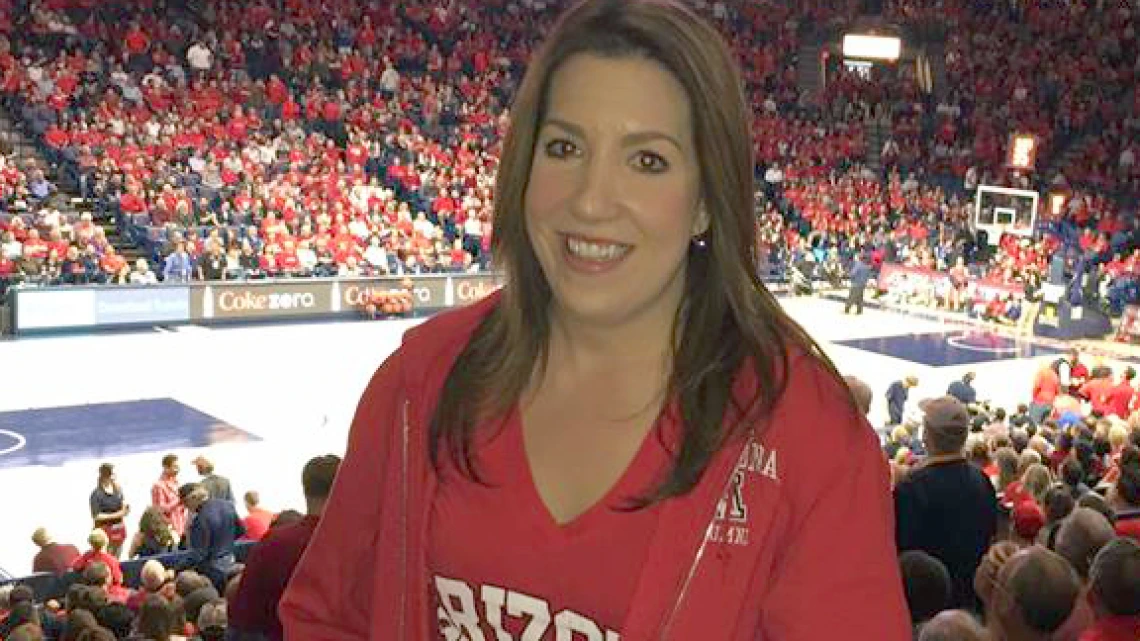
Allison Feldman was 31 years old when her life ended inside the Scottsdale, Arizona, home where she should have been safe.
To the public, her name would become connected to a murder investigation, a landmark use of familial DNA and an extraordinary legal battle that continued for more than a decade. To the people who knew her, those events represented only the final chapter of a much larger story.
Feldman was a daughter, sister, friend, University of Arizona graduate and medical sales professional whose work brought her into hospitals and trauma centers. She also volunteered with children who had survived serious burn injuries and maintained friendships that continued to shape her legacy long after her death.
When Feldman stopped answering her phone in February 2015, her family knew something was wrong. The discovery inside her home the following day began an investigation that would take three years to identify a suspect and more than 11 years to produce a murder conviction.
- “The Home Alone”: 20/20 Reports on Allison Feldman Homicide September 25 2026
- Who Is Ian Mitcham & What Happened to Her? 2026 Update & Profile
Contents
- Allison Feldman Grew Up in Minnesota
- Feldman Built a Career Helping Hospitals and Burn Patients
- Her Work With Burn Survivors Went Beyond Her Career
- February 17, 2015 Began Like an Ordinary Day
- Allison Suddenly Stopped Answering Her Phone
- What Happened to Allison Feldman Inside Her Home?
- The Killer Appears to Have Taken Allison’s Property
- Police Collected Hundreds of Pieces of Evidence
- More Than 100 People Came Under Investigation
- Allison’s Family Refused to Let Her Case Be Forgotten
- A Chance Connection Helped Allison’s Family Pursue Another Option
- Familial DNA Finally Gives Police a Family Name
- A DUI Blood Sample Connects Ian Mitcham to Allison’s Home
- The Arrest Did Not Bring a Quick Trial
- The DNA Fight Reaches Arizona’s Highest Court
- More Than 10 Years After Allison’s Death, the Murder Trial Begins
- A Jury Convicts Ian Mitcham of Murdering Allison Feldman
- Allison’s Father Lived Long Enough to See the Verdict
- The First Jury Cannot Decide Whether Mitcham Should Die
- What Happened to Ian Mitcham After the Trial?
- Allison’s Friends Created a Scholarship in Her Name
- Remembering Allison Feldman Beyond Her Murder
- More “Home Alone”
- More Feature Articles
Allison Feldman Grew Up in Minnesota
Allison Michelle Feldman was born on June 14, 1983, and grew up in Minnesota. She was the daughter of Harley and Elayne Feldman and remained close to her family after leaving her home state.
Her life eventually took her southwest to Arizona, where she attended the University of Arizona. She studied Spanish and communications and spent part of her university education studying abroad in Spain.
That experience became one of the important chapters of Feldman’s young life. Years later, after her death, her friends and family would use her connection to international study as the basis for one of the projects created in her memory.
After graduating, Feldman chose to remain in Arizona. The state became her home, and she built both a career and a large circle of friends there.
Feldman Built a Career Helping Hospitals and Burn Patients
Feldman worked in medical sales for Mölnlycke, a Swedish medical-products company. Her work involved products used in hospitals, including dressings for burn and surgical patients.
Her role was not confined to ordinary sales calls. Feldman worked with medical professionals who depended on the products she represented when treating patients. Shortly before her death, she had received a promotion that expanded her responsibilities as a burn specialist covering trauma centers across several states.
Her mother later recalled that nurses could contact Allison outside business hours when they needed help obtaining a dressing. Even when she was spending time with friends, she could get into her car and make a long drive to deliver what a hospital needed.
Her performance at work had also been recognized by her employer. Friends, colleagues and clients described a woman who had established herself in her profession at an age when much of her adult life still appeared to lie ahead.
Her Work With Burn Survivors Went Beyond Her Career
Feldman’s connection to burn care extended beyond her paid employment.
She volunteered with the Arizona Burn Foundation’s Camp Courage in Prescott, a program serving children who had suffered burn injuries. The camp gives young burn survivors an opportunity to take part in activities while spending time with other children who have experienced similar injuries.
Feldman contributed her time to the program, and her name was later placed on Camp Courage’s Wall of Champions in recognition of her involvement.
It was one part of a pattern her family and friends described after her death. They remembered someone who gave her time to other people and who formed relationships across different parts of her life.
The scale of those relationships became apparent after she died. Her father later recalled that about 300 people attended her funeral in Minnesota and another 300 attended a memorial service in Arizona.
February 17, 2015 Began Like an Ordinary Day
On February 17, 2015, Feldman was living in a home in Scottsdale near Pima and Thomas roads.
Investigators reconstructed part of her final evening and determined that she returned home after a shopping trip at about 9 p.m.
Nothing indicated that she knew she was about to encounter danger.
At about 9:30 p.m., a neighbor later told investigators that she heard a scream coming from the direction of Feldman’s home.
At some point that night, someone entered the house.
Police would later conclude that Feldman was attacked inside.
Allison Suddenly Stopped Answering Her Phone
The first sign for Feldman’s family that something was wrong was silence.
They had not heard from her, and her phone was turned off. That was out of character for a woman whose job in sales meant her phone was an essential part of her working life.
Her father, Harley Feldman, later recalled the concern the family felt. Allison had not called, they had not heard from her the previous night, and they could not reach her.
Her boyfriend went to her Scottsdale home on February 18 to check on her.
The front door was locked.
He had a key and let himself inside.
Almost at once, there was evidence that something was wrong: a strong smell of bleach or chlorine filled the house.
He continued into the residence and found Allison in a hallway.
She was dead.
What Happened to Allison Feldman Inside Her Home?
The crime scene showed that Feldman had suffered a prolonged attack.
She had been beaten, strangled and sexually assaulted. Court records later disclosed that the sexual assault involved a bottle.
Her autopsy determined that the cause of death was a combination of blunt-force trauma to the head and asphyxia caused by strangulation.
Investigators also found evidence suggesting that a struggle had moved through different areas of the residence. Objects had been broken, and blood was found in locations that included the kitchen and pool area.
The killer then appears to have attempted to destroy evidence.
Bleach or another chlorine-based substance had been poured on Feldman and used around the residence. The odor was still strong enough for her boyfriend to notice when he entered the home the next day.
The effort created a difficult crime scene for Scottsdale police. One detective later described it as one of the worst scenes he had encountered.
The Killer Appears to Have Taken Allison’s Property
The investigation also found that property was missing from Feldman’s home.
During the eventual prosecution of Ian Mitcham, prosecutors told jurors that the killer left with items including Feldman’s jewelry, wallet, mobile phone and house key, along with a large amount of cash.
Whether theft was the reason the offender entered the house remained less clear. Investigators never established a motive that explained the full attack.
More important, police could find no obvious person in Feldman’s life who fit the evidence.
The possibility that she had been attacked by someone with no established relationship to her widened the investigation. Detectives could not begin with a known partner, former partner or other clear personal connection and work outward.
Instead, they faced the possibility that Allison had encountered someone she barely knew or did not know at all.
Police Collected Hundreds of Pieces of Evidence
Scottsdale police undertook an extensive examination of Feldman’s home.
Investigators spent days processing the property and collected hundreds of pieces of evidence. The use of bleach complicated their work, and usable fingerprints were not available to provide the straightforward identification detectives hoped to find.
The killer had not erased everything.
Investigators recovered biological evidence and developed a male DNA profile.
That profile represented their strongest route to identifying the attacker. If police could determine whose DNA had been left in Feldman’s home, they could potentially answer the central question of the investigation.
They entered the profile into the available law-enforcement system.
There was no direct match.
More Than 100 People Came Under Investigation
Detectives began the laborious process of examining Feldman’s life and the people who might have crossed paths with her.
Over the course of the investigation, police considered more than 100 suspects and persons of interest.
Friends, acquaintances and other possible connections were examined. Investigators pursued leads and tried to determine whether anyone had a motive to hurt her.
Nothing produced the evidence necessary to make an arrest.
Rewards were offered for information. An initial $1,000 reward announced in 2015 was increased to $10,000.
Still, no one came forward with the information police needed.
The DNA remained unidentified.
Allison’s Family Refused to Let Her Case Be Forgotten
As months turned into years, Feldman’s family continued pressing for answers.
The Scottsdale community also remembered her. Vigils were held, including a gathering outside Feldman’s home in November 2015 and another outside the Scottsdale Justice Center on the first anniversary of her death.
An event known as Allison’s Watch was held in her memory and included programs focused on women’s safety.
Behind those public events was a family living with the absence of an answer to the most basic question: who had killed Allison?
By February 2017, two years had passed without an arrest.
By early 2018, the case remained open. Scottsdale investigators described it as one of the most difficult cases they had handled.
They had the killer’s DNA.
They still did not have his name.
A Chance Connection Helped Allison’s Family Pursue Another Option
One of the less conventional parts of the story began through Allison’s mother, Elayne Feldman.
In 2016, Elayne joined her father, Sid Shafner, on a trip to Poland and Israel. Shafner was a World War II veteran whose unit had helped liberate Dachau in 1945.
During the trip, Elayne met Barbara and Ed Leff of Scottsdale. She told them about Allison’s murder.
Barbara Leff had spent years in Arizona politics and was able to connect the Feldman family with people in state government, law enforcement and the legal system. Those connections contributed to discussions about expanding the forensic options available to investigators.
One of those options was familial DNA searching.
Instead of waiting for the unknown killer himself to appear in a criminal DNA database, authorities could look for someone closely related to him.
Familial DNA Finally Gives Police a Family Name
Familial DNA searching works from the fact that close biological relatives share identifiable portions of their genetic profiles.
The technique does not mean that a database match identifies the killer. Instead, analysts can identify a person whose DNA suggests that a close relative may be the source of an unknown crime-scene profile.
Arizona developed procedures for using the technique, and Feldman’s case became the first major test.
In 2018, investigators ran the DNA recovered from the crime scene through a familial search.
They got a result.
The profile showed a potential close family relationship to Mark Mitcham, who was already incarcerated for a sexual offense.
Mark Mitcham could not simply be declared the killer because of that result. Investigators instead examined his immediate family to determine whether one of his relatives could have contributed the DNA found in Feldman’s home.
That investigation led to his younger brother.
Ian Mitcham.
A DUI Blood Sample Connects Ian Mitcham to Allison’s Home
Ian Mitcham had been arrested for DUI in 2015.
Police still possessed blood collected from him during that case. Once familial DNA pointed investigators toward the Mitcham family, authorities tested the retained sample.
The result transformed the investigation.
Ian Mitcham’s DNA matched the profile recovered from the Allison Feldman crime scene.
What had been an unidentified genetic profile for three years now had a name attached to it.
Police arrested 42-year-old Ian Mitcham on April 10, 2018.
Mitcham denied involvement in Feldman’s death.
Investigators were also unable to identify a meaningful prior relationship between Mitcham and Allison. Even after finding the man whose DNA matched the crime-scene evidence, the question of how or why their paths crossed remained unresolved.
The Arrest Did Not Bring a Quick Trial
For Allison’s family, Mitcham’s arrest represented the breakthrough they had waited three years to see.
It did not mean the case was close to completion.
A legal dispute developed over the blood sample police had used to create Mitcham’s DNA profile. The blood had originally been collected for an unrelated DUI investigation, and Mitcham had been informed that an unused vial would be destroyed after a specified period.
Instead, police retained it for years.
Mitcham’s attorneys argued that he had consented to the blood being tested for alcohol or drugs in the DUI case, not to police using it years later to investigate an unrelated homicide.
In January 2023, a judge agreed and excluded the DNA evidence.
The ruling placed one of the prosecution’s central pieces of evidence in jeopardy.
The DNA Fight Reaches Arizona’s Highest Court
Prosecutors appealed, and the Arizona Court of Appeals reversed the suppression ruling in August 2023.
The dispute then reached the Arizona Supreme Court, which issued its decision in December 2024.
The court agreed with a crucial part of Mitcham’s argument: police conducting DNA analysis on his retained blood without a warrant violated his Fourth Amendment rights.
But that did not end the case.
The court determined that the DNA profile could still be admitted under the inevitable discovery doctrine. Mitcham had since received unrelated felony convictions that required his DNA to be collected and entered into Arizona’s offender database. The court concluded that authorities therefore would have obtained the same DNA profile through lawful means.
Mitcham asked the U.S. Supreme Court to review the issue. In April 2025, the Supreme Court declined his petition.
The prosecution could proceed with the DNA evidence.
More Than 10 Years After Allison’s Death, the Murder Trial Begins
Jury selection in Mitcham’s trial began in October 2025, more than a decade after Allison was killed.
Opening statements followed in November.
Prosecutors presented a case built around the DNA evidence together with financial records, witnesses and other circumstantial evidence. They argued that Mitcham was the man who entered Feldman’s house, sexually assaulted her, beat and strangled her, took property and attempted to clean the crime scene with bleach.
The defense maintained that Mitcham was innocent.
His attorneys attacked the investigation, disputed the conclusions prosecutors drew from the evidence and argued that police had focused on the wrong person. They also attempted to direct attention toward another man who had lived near Feldman.
Police said they had found no evidence connecting that man to the murder.
The trial continued for months.
A Jury Convicts Ian Mitcham of Murdering Allison Feldman
Closing arguments began in April 2026.
Prosecutors told jurors that the evidence, with the DNA at its center, established that Mitcham was the man who attacked Feldman.
The defense maintained that the state had not proved that proposition and argued that investigators had failed to follow other leads.
The jury began deliberations after receiving the case on April 7.
On April 9, 2026, the verdict was announced.
Ian Mitcham was found guilty of first-degree murder, sexual assault and second-degree burglary in the killing of Allison Feldman.
It had been more than 11 years since Allison was found inside her home.
Allison’s Father Lived Long Enough to See the Verdict
One of the people waiting inside the courtroom was Allison’s father, Harley Feldman.
Harley had spent years advocating for his daughter, following the investigation and court proceedings and promoting the use of familial DNA. He also became involved with Parents of Murdered Children, an organization supporting families dealing with the murder of a loved one.
After the guilty verdict, he spoke about the limits of what a criminal conviction could accomplish. The verdict could hold Allison’s killer responsible, but it could not return his daughter or restore the years she had lost.
There was another painful turn less than three weeks later.
Harley Feldman died on April 29, 2026.
He had spent more than 11 years seeking a conviction for his daughter’s murder and lived to see the jury return guilty verdicts on every charge.
He did not live to see Mitcham receive his final sentence for Allison’s murder.
The First Jury Cannot Decide Whether Mitcham Should Die
Because prosecutors sought the death penalty, Mitcham’s conviction was followed by additional proceedings to determine his punishment for first-degree murder.
Jurors found the aggravating circumstances required for him to be eligible for capital punishment.
The penalty proceedings continued into May 2026.
During deliberations, problems emerged involving one juror, who had obtained outside information concerning prison and conducted independent research. She was removed and replaced by an alternate.
The reconstituted jury continued deliberating but could not reach the unanimous decision required on the death penalty.
The judge declared a mistrial in the murder penalty phase.
The mistrial did not overturn Mitcham’s conviction. He remained convicted of murdering Allison.
It meant only that another decision was required concerning his punishment for that crime.
What Happened to Ian Mitcham After the Trial?
On May 28, 2026, Mitcham was sentenced on the two convictions that did not depend on the unresolved capital penalty proceedings.
He received 3½ years for second-degree burglary and seven years for sexual assault, with the sentences running consecutively for a combined 10½ years. He received credit for time already served and was required to register as a sex offender.
His punishment for first-degree murder remained unresolved.
In June 2026, Maricopa County Attorney Rachel Mitchell announced that prosecutors would seek the death penalty again in a second penalty trial.
The murder conviction itself remained intact. The next proceeding would concern punishment, not whether Mitcham killed Feldman.
Allison’s Friends Created a Scholarship in Her Name
Long before the murder case reached a courtroom, the people who loved Allison began finding ways to preserve parts of her life.
Two of her University of Arizona friends helped establish the Allison Feldman Memorial Study Abroad Scholarship.
The project reflected Allison’s own experience studying in Spain while at university. Her family believed that time abroad had contributed to her development and wanted other students to have access to similar experiences.
The initial goal was to raise enough money over several years to endow the scholarship.
Support exceeded those expectations, allowing the program to begin helping students in Allison’s name.
It became a legacy connected not to the way she died, but to something she had experienced and valued while she was alive.
Remembering Allison Feldman Beyond Her Murder
The details of Feldman’s death became public because of the criminal investigation and trial. They are part of her story, but they do not define the 31 years that preceded February 17, 2015.
Her work placed her alongside medical professionals caring for people with serious injuries. Her volunteer work brought her to children recovering from burns. Her friendships lasted after college, and those friends continued gathering in her memory.
Her parents also spoke about the future their daughter never received.
Allison would never reach the career milestones that might have followed her promotion. She would never grow older alongside her friends. Her mother spoke about the pain of attending weddings knowing that Allison would never have the wedding and family life she had imagined for herself.
The scale of the response after her death reflected the number of lives she had entered during her own.
Hundreds attended services in Minnesota and Arizona. Friends continued marking her birthday. Community members attended vigils. Her name became attached to a scholarship helping students pursue experiences that had once shaped her own life.
For years, Allison Feldman was also the name attached to one of Scottsdale’s most difficult unsolved murders.
Familial DNA changed that.
The technique turned an unidentified profile into a family connection, the family connection led detectives to Ian Mitcham, and further DNA evidence helped build the prosecution that ended with his conviction.
On April 9, 2026, more than 11 years after Allison was killed inside her Scottsdale home, a jury found Ian Mitcham guilty of her murder.
The legal proceedings over his punishment continued.
The story of Allison Feldman, however, began long before the crime that made her name known across Arizona: with a young woman from Minnesota who moved west for university, built a career helping medical professionals care for patients, volunteered with young burn survivors and formed relationships that her family and friends continued to honor after her death.
More “Home Alone”
- “The Home Alone”: 20/20 Reports on Allison Feldman Homicide September 25 2026
- Who Was Allison Feldman & What Happened to Her? 2026 Update & Profile
- Who Is Ian Mitcham & What Happened to Her? 2026 Update & Profile
More Feature Articles
- “The Home Alone”: 20/20 Reports on Allison Feldman Homicide September 25 2026
- “Unmasking the Monster”: Dateline NBC Reports on Dana Beatty Case October 2 2026
- 48 Hours Pre-Empted October 3 2026 for UFC & College Football
- 60 Minutes Reports on “Who Needs Humans?”, “The Thom Tillis Tightrope” & “Saint Francis in the Cloud” on October 4 2026





1 Response
[…] Who Was Allison Feldman & What Happened to Her? 2026 Update & Profile […]