Who Was Faith Hedgepeth & What Happened to Her? 2026 Update & Profile
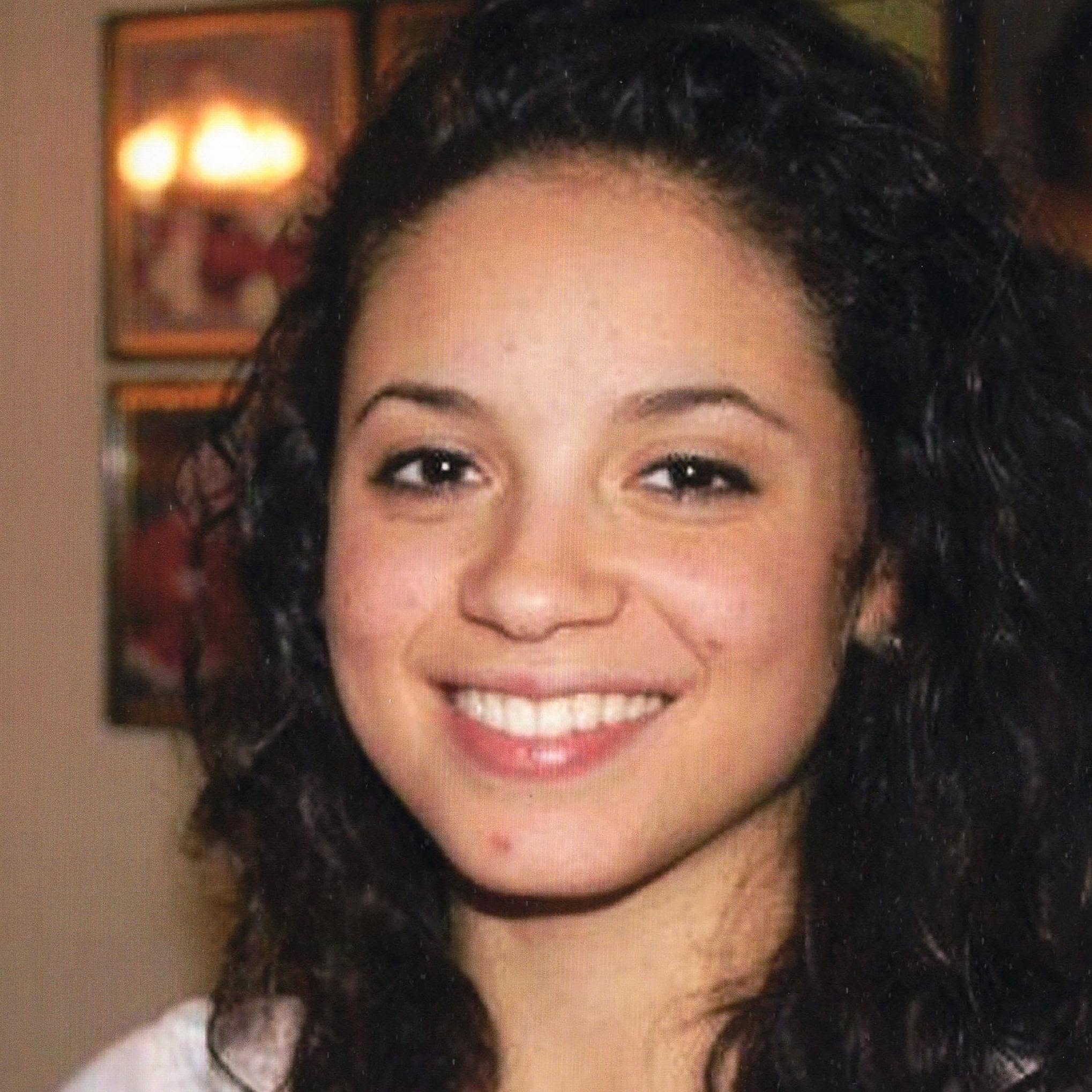
Faith Danielle Hedgepeth was a 19-year-old University of North Carolina at Chapel Hill student with ambitions of becoming a paediatrician when she was murdered inside an off-campus apartment on September 7, 2012. Her death launched a homicide investigation that remained unsolved for nine years and became one of North Carolina’s most closely followed murder cases.
A member of the Haliwa-Saponi Tribe, Hedgepeth had earned prestigious scholarships to attend university and hoped to become the first member of her family to graduate from college. She was studying biology, participating in Native American student organisations and preparing for a career in medicine.
On October 23, 2026, more than 14 years after her death, a Durham County jury convicted Miguel Salguero-Olivares of first-degree murder, first-degree rape, first-degree sexual offense and first-degree burglary. He received a sentence of life imprisonment without the possibility of parole, plus additional prison terms totalling 45 to 65 years.
Hedgepeth’s life, the circumstances of her murder and the investigation that brought her killer to justice are examined in ABC’s 20/20 episode “Justice for Faith,” airing Friday, October 30, 2026, at 9/8c.
- “Justice for Faith”: 20/20 Reports on Faith Hedgepeth Homicide October 30 2026
- Who Is Miguel Salguero-Olivares & Where Is He Now? 2026 Update & Profile
Contents
- Faith Hedgepeth’s Childhood and Family Background
- Her Life at the University of North Carolina
- Faith Hedgepeth’s Final Night: September 6, 2012
- The Discovery of Faith Hedgepeth’s Body
- What Investigators Found at the Murder Scene
- The Early Investigation and Questions About Faith’s Relationships
- The Nine-Year Search for Faith Hedgepeth’s Killer
- How Police Identified Miguel Salguero-Olivares
- What the 2026 Trial Revealed About Faith’s Murder
- The Jury’s Verdict and the Sentence for Faith’s Murder
- Faith Hedgepeth’s Parents Speak After the Conviction
- Faith Hedgepeth’s Legacy and the Life She Never Had the Chance to Live
- More “Justice for Faith”
- More Feature Articles
Faith Hedgepeth’s Childhood and Family Background
Faith Danielle Hedgepeth was born on September 26, 1992, in North Carolina. She grew up in the Hollister and Warrenton communities, where she was raised by her mother, Connie Hedgepeth, with support from her older siblings and extended family.
Her parents separated when she was an infant, but Faith maintained relationships with both sides of her family. Her father, Roland Hedgepeth, would describe his daughter as a source of hope during a difficult period of his life.
Faith belonged to the Haliwa-Saponi Tribe, a Native American community with deep historical connections to northeastern North Carolina. Her Indigenous heritage was an important part of her identity and influenced her academic interests and involvement in student organisations.
Family members described Faith as a young woman who valued education, maintained strong friendships and wanted to create opportunities for herself and others. She was an honour student in high school, participated in cheerleading and took part in extracurricular activities.
Her achievements earned her a Gates Millennium Scholarship, a programme supporting academically accomplished students from underrepresented backgrounds. She also received an Alston-Pleasants Scholarship to attend the University of North Carolina at Chapel Hill.
These awards provided Faith with the opportunity to pursue higher education and work toward a career that she hoped would allow her to care for children.
Her Life at the University of North Carolina
Hedgepeth enrolled at UNC-Chapel Hill to study biology. She hoped to continue her education after graduation and become a paediatrician, combining her interest in science with her desire to work with children.
She was involved in the Carolina Indian Circle, a student organisation supporting Native American students, and volunteered at the university’s American Indian Center. Her participation reflected her connection to her tribal heritage and her interest in Indigenous communities.
Faith was also interested in joining Alpha Pi Omega, a sorority established to support Native American women in higher education. On September 6, 2012, she attended a recruitment event for the organisation.
That evening, she told other students that she needed to leave to complete academic work. She was preparing a paper concerning the history of her tribe, a subject that connected her studies with her family’s background.
At the time of her death, Faith was a sophomore and was living off campus with her friend Karena Rosario. She was waiting for financial aid to become available so she could move into another residence.
Her family expected her to graduate and pursue further education. Instead, her life ended less than three weeks before her 20th birthday.
Faith Hedgepeth’s Final Night: September 6, 2012
Faith spent the evening of Thursday, September 6, attending an Alpha Pi Omega recruitment event and studying at UNC’s Davis Library.
At approximately 8 p.m., she met her roommate, Karena Rosario, at the library. The two women spent several hours studying before returning to their apartment at the Hawthorne at the View complex near the Chapel Hill-Durham boundary.
Around midnight, they changed clothes and decided to visit The Thrill, a nightclub in downtown Chapel Hill. Surveillance footage showed them entering the establishment at approximately 12:40 a.m. on September 7.
Rosario later told investigators that she had consumed alcohol and began feeling sick. At 2:06 a.m., security cameras recorded the women leaving the nightclub. Additional footage captured them in Faith’s vehicle at approximately 2:38 a.m.
They arrived at their apartment around 2:50 a.m. Rosario said she became sick after returning home and that Faith helped her.
During the following hour, the women exchanged messages with acquaintances. At 3:40 a.m., a message from Faith’s phone was sent to their mutual friend Brandon Edwards, asking him to come to the apartment because Rosario needed him.
The message was followed by a correction sent from Faith’s phone. These communications became part of the timeline examined by investigators.
At approximately 4:25 a.m., Rosario left the apartment with UNC soccer player Jordan McCrary. She testified that she believed Faith was asleep in the bedroom and that she left the apartment door unlocked.
That was the last known time Rosario was at the residence before the discovery of Faith’s body.
The Discovery of Faith Hedgepeth’s Body
On the morning of September 7, Rosario attempted to contact Faith but received no response. She arranged for another friend, Marisol Rangel, to drive her back to the apartment.
The two women arrived at approximately 11 a.m. and entered the residence. They found Faith in the bedroom, where she had suffered extensive injuries.
Faith was partially unclothed and had been subjected to a violent assault. Rosario called 911, bringing emergency responders and Chapel Hill police to the apartment.
Investigators documented blood at the scene and recovered objects believed to have been involved in the attack. A rum bottle found in the bedroom became a principal piece of evidence.
The medical examination established that Faith had died from blunt-force trauma to the head. She had sustained extensive skull fractures, cuts to her face and head, and injuries to her arms and legs.
The examination also documented injuries consistent with a struggle. Forensic evidence recovered from her body formed the basis of the sexual assault investigation.
The severity of the injuries indicated that Faith had been subjected to repeated blows. Prosecutors would later argue that the rum bottle had been used to inflict the fatal head injuries.
Her death was classified as a homicide, and investigators began examining the physical evidence, the movements of people connected to the apartment and Faith’s activities before the attack.
What Investigators Found at the Murder Scene
Police recovered a substantial amount of forensic evidence from the apartment, including biological material, fingerprints, a rum bottle, a wine bottle and a handwritten message.
The message was written on a torn section of a white paper takeout bag and contained the words “I’M NOT STUPID,” “BITCH” and “JEALOUS.”
Investigators considered whether the message had been written by the attacker and whether it offered information about the circumstances of the killing. Its precise meaning remained uncertain.
Forensic testing identified male DNA on Faith’s body. Investigators also recovered DNA from other objects inside the apartment, including the paper bag and the rum bottle.
The presence of biological material gave police a potential means of identifying the person responsible. However, comparisons with individuals investigated during the early stages of the case did not produce a match.
Investigators also examined fingerprints and palm impressions recovered from bottles inside the residence. Those impressions would become significant when police identified a suspect in 2021.
Other evidence included possible bloodstains and items of clothing. Questions about the collection and preservation of some samples became part of the defence’s arguments during the 2026 trial.
The Early Investigation and Questions About Faith’s Relationships
During the initial investigation, detectives examined Faith’s friendships, her living arrangements and individuals who had been involved in disputes with people close to her.
One person investigated was Eriq Takoy Jones, the former boyfriend of Faith’s roommate, Karena Rosario. Their relationship had involved allegations of domestic violence, and Faith had supported Rosario in seeking legal protection.
Investigators learned that Jones had expressed resentment toward Faith and had reportedly made threats connected to his relationship with Rosario.
Police obtained a DNA sample from Jones, but it did not match the male DNA recovered from the murder scene. Investigators excluded him as the source of that evidence, and he was not charged in Faith’s death.
Other individuals connected to the nightclub, the apartment complex and Faith’s social circle were interviewed and tested. Investigators also examined telephone records, text messages and surveillance footage.
The case attracted public attention as months passed without an arrest. Rewards were offered for information, and the University of North Carolina community continued commemorating Faith’s life.
The investigation also faced scrutiny over its handling of evidence and the sealing of court records. News organisations sought access to documents that could explain what police had discovered.
In 2014, the release of investigative records provided new information about Faith’s final hours, the crime scene and the evidence collected by police.
Despite those disclosures, investigators had not identified the person whose DNA was recovered from her body.
The Nine-Year Search for Faith Hedgepeth’s Killer
The investigation continued through the involvement of Chapel Hill police, the North Carolina State Bureau of Investigation and forensic specialists.
Detectives pursued leads, interviewed people connected to the case and attempted to identify the unknown male DNA contributor.
The case also attracted national media coverage. In September 2016, ABC’s 20/20 examined Faith’s murder and the evidence that investigators hoped would lead to an arrest.
During that investigation, police released a computer-generated facial prediction developed by Parabon NanoLabs using DNA recovered from the crime scene.
The technology analysed genetic markers associated with physical characteristics, including ancestry, hair colour, eye colour and skin pigmentation. The resulting image was intended to help investigators narrow the search.
The prediction suggested that the unknown DNA contributor had ancestry associated with Latin America and Europe. However, the image did not identify a specific individual.
Faith’s family continued waiting for answers as the years passed. Her mother, father and siblings remained connected to efforts to keep her case in public view.
The breakthrough came in 2021, when investigators used genetic genealogy to identify relatives of the unknown DNA contributor.
How Police Identified Miguel Salguero-Olivares
Investigative genetic genealogy allowed authorities to examine genetic relationships between the unknown DNA contributor and potential relatives.
Investigators used the information to identify distant family connections and narrow the list of possible suspects. Their work led them to Miguel Salguero-Olivares, a man who had been 19 years old when Faith was killed.
Salguero-Olivares was born in Guatemala and had moved to the United States before September 2012. He was not a UNC student and had not been identified as a principal suspect during the original investigation.
In August 2021, he was stopped by police in an unrelated driving-while-impaired investigation. Authorities obtained a DNA sample that prosecutors said matched evidence recovered from Faith’s body and the murder scene.
On September 16, 2021, Chapel Hill police announced that Salguero-Olivares had been arrested and charged with first-degree murder.
The announcement came nine years and nine days after Faith’s body was discovered.
The arrest provided investigators with a named suspect whose DNA could be compared against the evidence collected in 2012. Further forensic analysis also connected his fingerprints and palm impression to objects recovered from the apartment.
Salguero-Olivares remained in custody as prosecutors prepared their case. In November 2024, additional charges of first-degree rape, first-degree sexual offense and first-degree burglary were filed.
He pleaded not guilty and maintained his innocence throughout the trial proceedings.
What the 2026 Trial Revealed About Faith’s Murder
The trial began in Durham County in September 2026, more than 14 years after Faith’s death.
Prosecutors presented testimony from 23 witnesses over more than nine days, including crime scene specialists, forensic scientists, law enforcement officers, Faith’s friends and the medical examiner.
The jury heard details about the injuries Faith suffered, the evidence recovered from her body and the objects found inside the apartment.
Medical testimony established that Faith had sustained extensive head injuries consistent with repeated blunt-force impacts. Prosecutors identified the rum bottle as the weapon used in the killing.
Forensic scientists testified that DNA recovered from Faith’s body matched Salguero-Olivares. Additional DNA evidence and fingerprint comparisons linked him to objects inside the apartment.
Prosecutors argued that the combined evidence established his involvement in the sexual assault and murder.
They also presented a possible theory concerning his presence near the apartment complex on the night of the killing. According to the prosecution, Salguero-Olivares may have attended a barbecue hosted by a neighbour and approached the women before the attack.
Prosecutors suggested that he may have been rejected and returned after Rosario left the apartment. However, no eyewitness corroborated that proposed encounter, and the prosecution acknowledged that the jury did not need to accept the theory to reach a guilty verdict.
The defence challenged the interpretation of the forensic evidence and argued that the DNA did not establish when sexual contact occurred.
Defence attorneys suggested that Salguero-Olivares could have had consensual sexual contact with Faith before her death. They also criticised aspects of the investigation, including missing evidence and areas that police had not searched.
Salguero-Olivares did not testify, and his defence team rested without calling witnesses.
The case proceeded to closing arguments on October 22, 2026.
The Jury’s Verdict and the Sentence for Faith’s Murder
On Friday, October 23, 2026, jurors returned guilty verdicts against Salguero-Olivares on all four charges.
He was convicted of first-degree murder, first-degree rape, first-degree sexual offense and first-degree burglary.
The jury deliberated for approximately six hours across two days before reaching its decision.
The verdict followed a prosecution built around DNA evidence, fingerprint comparisons, medical findings and testimony about the events surrounding Faith’s death.
Salguero-Olivares was sentenced to life imprisonment without the possibility of parole for murder. He also received additional consecutive prison sentences totalling 45 to 65 years for the other crimes.
His attorneys indicated that the convictions would be appealed.
For Faith’s family, the verdict marked the conclusion of the criminal trial after more than 14 years of waiting. It established the legal responsibility of the man whose DNA investigators had connected to the crime scene.
Faith Hedgepeth’s Parents Speak After the Conviction
Following the verdict, Faith’s parents addressed the court and spoke about the impact of losing their daughter.
Her mother, Connie Hedgepeth, told the judge that she had forgiven her daughter’s killer within three weeks of Faith’s death. She explained that forgiveness had been a personal decision made long before investigators identified Salguero-Olivares.
Connie described the murder as a senseless and cruel act and expressed sympathy for the convicted man’s family.
Faith’s father, Roland Hedgepeth, spoke about the emotional impact of losing his daughter. He described Faith as a source of hope in his life and said that her death had left him with a lasting sense of loss.
He acknowledged that forgiving an unidentified killer had been different from confronting the person convicted of the crime. Despite that distinction, he told the court that he forgave Salguero-Olivares.
The family’s statements reflected the personal consequences of a murder investigation that had continued through much of their lives.
The verdict provided accountability through the criminal justice system, but it could not restore the years Faith’s family had lost with her.
Faith Hedgepeth’s Legacy and the Life She Never Had the Chance to Live
Faith Hedgepeth was 19 years old when she died, less than three weeks before her 20th birthday. She had completed part of her undergraduate education and was working toward a career in medicine.
Her academic accomplishments reflected years of work and the support of a family that wanted her to succeed. Her scholarships had given her the opportunity to attend one of North Carolina’s leading public universities.
Her involvement in Native American student organisations also connected her to a community that continued honouring her after her death.
In 2013, Alpha Pi Omega inducted Faith as an honorary member, recognising her interest in the sorority and her contributions to Indigenous student life. The tribute also drew attention to the issue of missing and murdered Indigenous women.
Her death remained a subject of public concern during the nine years before the arrest and the five years that followed. The investigation became an example of how advances in forensic science can help resolve criminal cases that have resisted conventional investigative methods.
The October 2026 conviction brought legal accountability for Faith’s murder, but her family and friends continue to remember her for her life before the crime.
She was a daughter, sister, friend, scholarship recipient and aspiring paediatrician whose future was taken from her in September 2012.
ABC’s 20/20 revisits her story in “Justice for Faith,” airing October 30, 2026, with interviews examining the investigation, the trial and the impact of the verdict on those who knew her.
Fourteen years after her death, Faith Hedgepeth’s name remains connected to the pursuit of justice, the work of investigators and the family and community that preserved her memory.
More “Justice for Faith”
- “Justice for Faith”: 20/20 Reports on Faith Hedgepeth Homicide October 30 2026
- Who Was Faith Hedgepeth & What Happened to Her? 2026 Update & Profile
- Who Is Miguel Salguero-Olivares & Where Is He Now? 2026 Update & Profile