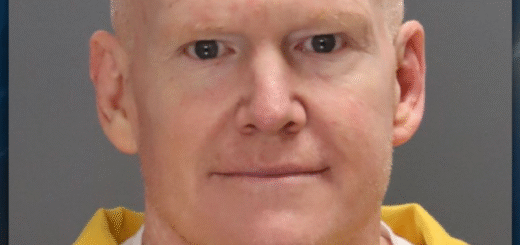
“Yogurt Shop Murders”: 20/20 Reports on A Long Awaited Breakthrough February 27 2026
ABC’s 20/20 presents a major update on one of the most devastating crimes in Texas history in the two-hour broadcast The Yogurt Shop Murders, airing February 27. The episode revisits the 1991 killings of four teenage girls in Austin and examines the decades of investigation, controversy, and scientific advances that ultimately brought long-awaited answers.
Through interviews with investigators, family members, legal experts, and those directly affected by the case, the program traces the emotional and legal journey that followed the crime. The broadcast also explores how the case became a powerful example of both the risks of wrongful convictions and the growing role of forensic technology in resolving long-standing cold cases.
Contents
The Night That Shocked Austin
On December 6, 1991, a fire was reported at an I Can’t Believe It’s Yogurt! shop in Austin, Texas. After firefighters extinguished the blaze, they discovered the bodies of four teenage girls inside the store. The victims were Amy Ayers, 13; Eliza Thomas, 17; Jennifer Harbison, 17; and her sister Sarah Harbison, 15. Jennifer and Eliza were employees closing the shop, while Sarah and Amy had come to get a ride home.
The crime scene revealed extreme violence. Each of the victims had been bound, sexually assaulted in at least one case, and shot in the head execution-style. The fire had been deliberately set, destroying much of the physical evidence. Investigators believed the perpetrators had controlled the victims for a period of time before killing them and escaping through a rear exit. The brutality of the attack and the loss of four young lives left a lasting impact on the Austin community and drew national attention.
The Investigation and Controversial Confessions
In the years that followed, the investigation struggled to produce clear physical evidence. Under pressure to solve the case, authorities focused on four young men: Robert Springsteen, Michael Scott, Maurice Pierce, and Forrest Welborn. During interrogations conducted years after the crime, confessions were obtained from some of the suspects.
Springsteen and Scott were tried largely on the basis of their statements. Prosecutors presented detailed accounts of the crime, but no physical evidence connected the men to the scene. Both were convicted of capital murder. Springsteen received a death sentence, later commuted to life, and Scott was sentenced to life in prison.
Concerns soon emerged about the reliability of the confessions. There were no recordings of the interrogations, making it impossible to determine what information may have been provided to the suspects by investigators. Questions about coercion grew stronger as DNA testing failed to link any of the four men to the crime.
Convictions Overturned and a Case in Limbo
In 2008, the Texas Court of Criminal Appeals overturned the convictions, ruling that prosecutors had violated the defendants’ constitutional rights by using portions of co-defendants’ statements that could not be challenged in court. Springsteen and Scott were released in 2009, and all charges were later dismissed after DNA evidence excluded them and the other original suspects.
Despite their release, the legal outcome left unresolved issues. The courts did not formally declare the men innocent, which meant they were not eligible for state compensation. Meanwhile, the victims’ families were left without answers, and the case returned to cold case status.
Over the years, more than 50 individuals reportedly confessed to the murders, none of whom proved to be credible suspects. The loss of evidence in the fire and the passage of time complicated further investigation. Still, advances in forensic science kept the possibility of a breakthrough alive.
Forensic Advances and the Identification of a Killer
Decades after the murders, new DNA technology allowed investigators to reexamine biological evidence collected from the crime scene. Using modern methods, including investigative genetic genealogy, authorities developed a lead that pointed to a previously unidentified suspect.
In September 2025, Austin police announced that DNA evidence linked the crime to Robert Eugene Brashers, a serial offender with a history of violent crimes. Brashers had died by suicide during a police standoff in 1999, years before the breakthrough. Additional evidence connected him to the case, including ballistic findings consistent with a firearm he had used.
Because the suspect was deceased, no criminal trial could take place. However, the identification brought official closure to the investigation. For the victims’ families, the announcement provided long-awaited confirmation after more than three decades of uncertainty. The development also underscored the value of modern forensic techniques in resolving cases once considered unsolvable.
The Legacy of the Case
The yogurt shop murders left a lasting mark not only on the families and community but also on the criminal justice system. The case became a cautionary example of the risks associated with unrecorded interrogations and confession-based prosecutions without supporting physical evidence. Several jurors later stated they would have reconsidered their verdicts had DNA results been available at the time.
The case also influenced policy. The long fight for renewed investigation helped inspire federal legislation aimed at giving families the right to request cold case reviews and encouraging the use of updated forensic methods. These efforts reflect the broader impact of the case beyond Austin.
20/20’s The Yogurt Shop Murders brings together the full arc of the story, from the tragedy of 1991 to the scientific breakthrough that identified the killer. The episode offers a comprehensive account of loss, legal controversy, and persistence, documenting a case that remained unresolved for 34 years before finally reaching a measure of justice.
More “Yogurt Shop Murders”
- “Yogurt Shop Murders”: 20/20 Reports on A Long Awaited Breakthrough February 27 2026
- Who Is Robert Eugene Brashers & Where Is He Now? 2026 Update & Background
More Feature Articles
- “Yogurt Shop Murders”: 20/20 Reports on A Long Awaited Breakthrough February 27 2026
- “Malice”: Dateline Reports on William “Jake” Embert Homicide February 27 2026
- “Deadly Dance”: Dateline Reports on Doug Benefield Homicide February 28 2026
- “The Dead of Night”: Dateline Reports on LaJoya McCoy Homicide February 28 2026
- “The Woman Who Died Twice”: 48 Hours Reports on Mindi Kassotis Homicide February 28 2026
- 60 Minutes Reports on “Under Siege”, “Growing Up Behind Walls” & “Breaking the Cycle” on March 1 2026